
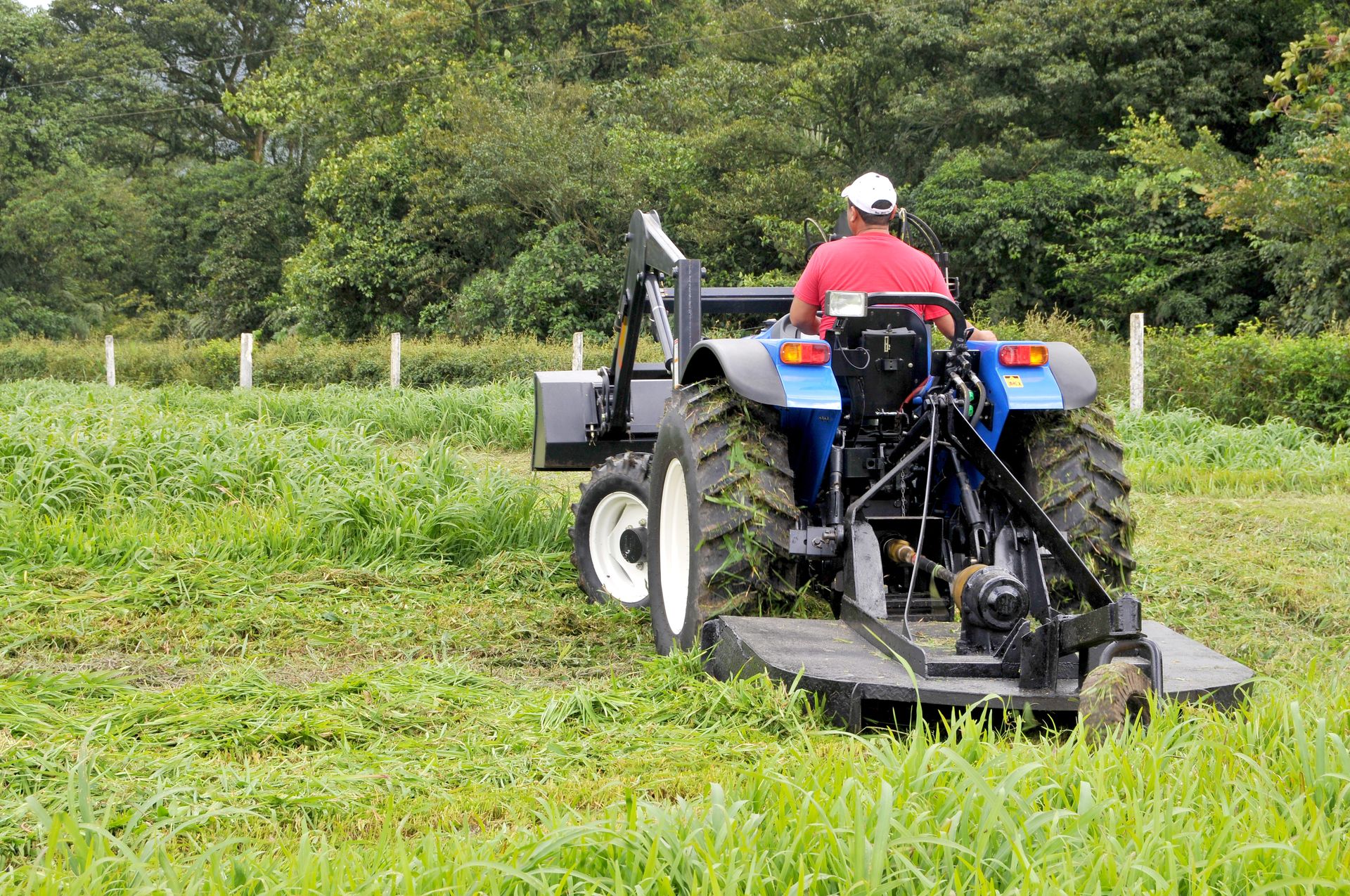
Brush hogging, also known as rotary cutting, is a cost-effective land clearing and management technique designed to cut through heavy brush, small trees, and tall weeds that conventional mowers cannot handle.
Brush hogs utilize a tractor-mounted rotary cutter with powerful, horizontally spinning blades that mow and flatten dense vegetation without disturbing or uprooting the native soil.
This makes brush hogging ideal for land-clearing projects in environmentally sensitive areas, unlike bulldozers and grubbers, which strip the topsoil and leave it vulnerable to sedimentation.
In addition to helping prepare and clear land for development, brush hogging is a vital tool for wildfire mitigation.
In this guide, you’ll learn the basics of bush hogging for residential and commercial uses, including when it’s recommended over other land clearing methods, how it works, and the benefits it offers for stormwater management.
Get My Free Brush Hogging Quote Now
How Does Brush Hogging Work?
Brush hogging, also known as rotary cutting or bush hogging, is a method of land clearing and management designed to cut through overgrown fields.
Brush hogging relies on a tractor-mounted rotary cutter with powerful, horizontally spinning blades that allow machines to cut through brush that conventional mowers cannot tackle, such as:
- Thick weeds
- Bushes
- Vines
- Small trees
Brush hogging is ideal for creating manageable, visually appealing landscapes without disturbing or uprooting native soil.
The Mechanics of Brush Hogging
To understand how brush hogging differs from conventional lawn mowing or land excavation, it’s important to understand how the machine works. Here’s a closer look at the process:
- Attachment: A brush hog is typically mounted on the back of a tractor or ATV via a three-point hitch.
- Cutting Action: The blades on a bush hog rotate at high speeds, cutting through thick grass, brush, and even small trees without damaging the soil.
- Clearance Control: The operator controls the cutting height and direction, allowing precise removal of overgrown areas.
- Debris Management: The sturdy blades chop up vegetation into smaller pieces, often leaving the remnants on the ground as mulch to promote vegetative growth. This also helps prevent soil erosion and aids in weed control.
The Benefits of Brush Hogging for Commercial Land Development
Brush hogging is a versatile and cost-effective medium between conventional mowing and land-clearing techniques.
Unlike mowers, brush hogs can eliminate thick, stubborn weeds and bushes that tend to invade unkempt areas. This makes bush hogging the preferred method for commercial land management.
On the other hand, bush hogging can be a more affordable and efficient option than land clearing, such as soil excavation.
Brush hogging keeps native soil intact, reducing erosion and increasing ground cover during commercial construction projects.
- Efficiency: Brush hogs are designed to cover large areas quickly, making them ideal for extensive commercial land clearing.
- Safety: Using a bush hog reduces the hazards associated with overgrown terrain, such as hidden rocks, holes, or dangerous wildlife.
- Improved Soil Health: Brush hogging leaves mulch on the ground, which decomposes, enriching the soil and controlling weeds.
- Enhanced Land Usability: Brush hogging makes areas more accessible, allowing landowners to better use or develop their property more effectively.
When Brush Hogging Is Recommended Over Other Land Clearing Projects?
While heavy machinery like bulldozers or excavators completely strips the ground, brush hogging offers a more precise, less destructive approach to managing vegetation.
It is the ideal choice when you need to clear dense overgrowth quickly without disrupting the underlying environment.
Here are the most common scenarios where brush hogging outshines other land-clearing methods:
- Commercial Land Management: If you manage multiple acres of open land, a brush-hogging machine will be more efficient at maintaining that land than a mower.
- Field and Pasture Maintenance: For farmland and pastures, brush hogging helps manage overgrown grasses and keeps fields clear.
- Trail and Roadside Clearing: Brush hogging is ideal for maintaining clear, safe trails in nature and roadsides by cutting back invasive vegetation.
- Site Preparation: Before construction or landscaping, brush hogging clears unwanted brush and small trees without ripping up the native soil, creating a workable area.
The table below breaks down the key differences to help you choose the best technique for your land management project:
| Land Clearing Method | Best Used For… | Impact on Native Soil | Max Material Size |
|---|---|---|---|
| Brush Hogging |
|
Minimal to none Mows and flattens above-ground growth without uprooting. |
Up to 3–4 inches in diameter (saplings/brush). |
| Forestry Mulching |
|
Low Grinds vegetation down to the ground level without ripping up root systems. |
Up to 6–8 inches in diameter. |
| Bulldozing / Excavation |
|
High Strips topsoil, removes roots, and heavily disrupts the ground structure. |
No limit (can clear mature, full-sized trees). |
| Hand-Clearing / Brush Cutting |
|
None Highly precise manual clearing. |
Light brush, weeds, and very small twigs. |
Can I Perform Brush Hogging On My Own?
While smaller residential fields can be maintained by the owner, we recommend commercial bush-hogging services for any land preparation or ongoing commercial maintenance.
Professional brush-hogging services utilize industrial-grade equipment designed to tackle dense overgrowth, stubborn thickets, and small trees that would easily overwhelm or damage consumer-tier machinery.
Investing in a professional service ensures the job is done safely, quickly, and to standard.
What to Look for in a Bush Hogging Service
Finding a trusted bush-hogging service is essential to ensuring any project you start goes off without a hitch and that any ongoing projects are performed according to spec.
Here are some things to look for when partnering with a bush-hogging service:
- Experience: Look for professionals with experience in similar terrain and vegetation, and ask for past projects and quotes.
- Expertise: Find a partner that specializes in several forms of land clearing and management, including excavation, brush hogging, and erosion management. These specialties ensure that we tackle every project correctly and comply with applicable regulations.
- Equipment: Ensure any provider you choose has the right equipment for your land’s needs.
- Insurance and Licensing: Make sure any provider is insured and licensed to protect you and your property.
By balancing high-capacity land clearing with essential topsoil preservation, brush hogging remains an indispensable tool for sustainable land management and long-term property upkeep.
FAQs
What is the difference between brush hogging and brush cutting?
While the terms are often used interchangeably, the primary difference lies in the scale and equipment used. Brush hogging utilizes a heavy-duty, tractor-mounted rotary cutter designed to obliterate dense undergrowth, tall weeds, and small saplings across large acreages.
Brush cutting, on the other hand, typically involves smaller, hand-held or walk-behind machinery. While excellent for tight spaces and clearing light brush, standard brush cutters cannot match the speed, capacity, or raw clearing power of a commercial bush hog.
Can I bush hog in wet conditions?
It is highly recommended to wait for dry conditions before beginning a project. Operating heavy machinery on wet ground can severely compact the native soil, disrupt root systems, and create deep ruts that ruin your property’s topography.
Furthermore, wet, heavy vegetation clumps together easily, which bogs down the blades, strains the equipment’s drivetrain, and leaves behind an uneven, messy cut.
What maximum size tree or sapling can a brush hog cut?
A commercial-grade brush hog can safely cut and shred saplings and small trees up to 3 to 4 inches in diameter. Attempting to clear anything larger can severely damage the rotary blades, ruin the spindle, or pose a safety hazard from flying debris.
For properties with mature trees or heavy timber, techniques like forestry mulching or excavation are required.
How often does a pasture or commercial lot need to be bush hogged?
For optimal land management, most properties should be brush-hogged once or twice a year. A late-spring or early-summer cut helps control invasive weeds before they go to seed, while a second pass in late autumn clears overgrown summer vegetation and reduces wildfire fuel loads ahead of the dry season.
Does brush hogging remove the roots of overgrown vegetation?
No, brush hogging does not uproot vegetation or disrupt the native soil. It is designed to cut, shred, and flatten above-ground growth. While this is ideal for preventing soil erosion and preserving topsoil, it means that aggressive weeds and woody saplings will eventually grow back. For permanent removal, the area must be treated with a targeted herbicide or cleared by root-grubbing.