
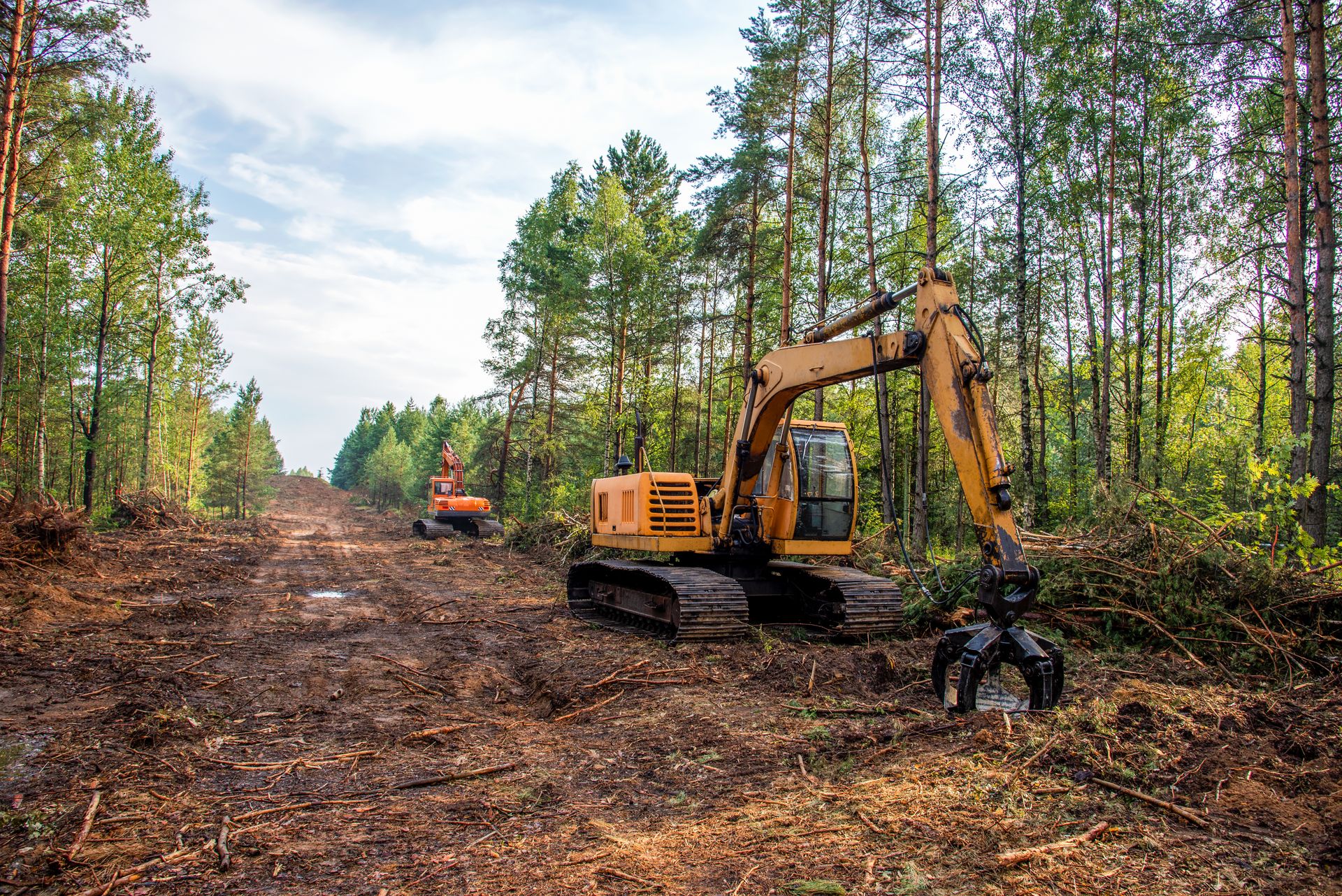
The average cost to clear land ranges from $1,395 to $6,167 per acre, with smaller, lightly wooded plots costing a few hundred dollars and dense, steep, two-acre parcels exceeding $10,000.
Total project costs depend heavily on a mix of terrain, equipment, and labor variables:
- Site Characteristics: Plot size, slope gradient, and accessibility directly influence project scope.
- Vegetation & Debris Density: Heavy timber, thick brush, and embedded boulders require heavy machinery that jacks up costs.
- Clearing Method Used: Costs range from lower-cost options such as grubbing and mulching to high-end mechanical land clearing with excavators and bulldozers.
- Secondary Operations: Expenses often include stump removal, site grading, sediment control, and debris disposal
Accurately estimating land-clearing costs before breaking ground is vital to avoiding unexpected budget overruns and project delays.
In this article, you’ll learn what factors influence land clearing costs and what you can expect to pay for a project based on these characteristics.
How Much Does It Cost to Clear Land?
The average cost to clear land in the United States ranges from $1,395 to $6,167 per acre, with most property owners paying about $3,400 per acre.
However, actual expenses can vary dramatically based on site conditions, equipment needs, and labor requirements.
For example, smaller wooded areas can cost as little as a few hundred dollars to clear some trees and shrubs with handheld equipment, while two full-sized acres of land with dense vegetation and sloped fields could cost $10,000 or more.
5 Factors Influencing Land Clearing Costs
The type of method used to clear land and its associated cost will often depend on several factors, including the project scope, its accessibility, and more:
1. Land Size and Project Scope
The total acreage directly affects labor hours, fuel consumption, and equipment wear. While larger parcels lower per-acre costs due to economies of scale, total project expenses increase with larger property boundaries.
2. Equipment Required
Different land clearing techniques demand specialized heavy machinery:
- Handheld Tools & Skid Steers: Lowest equipment cost; ideal for light brush hogging and small tree removal.
- Forestry Mulchers & Bulldozers: Moderate-to-high equipment rates; efficient for dense vegetation and medium timber.
- Heavy Excavators & Crane Operations: Highest operational cost; required for large-scale stump extraction, rock removal, and severe earthmoving.
3. Density and Type of Vegetation
The complexity of clearing depends directly on what is anchored in the ground:
- Grass, Weeds, & Small Shrubs: Quick to clear with minimal equipment load.
- Thick Underbrush & Invasive Vines: Requires mulching machinery to prevent rapid regrowth.
- Mature Hardwood Trees & Deep Roots: Demands significant effort to fell trees and extract root systems (grubbing), which increases overall labor costs.
4. Debris Disposal and Processing Methods
Disposing of removed trees, brush, and roots adds noticeable line items to a quote, depending on the chosen processing method.
On-site mulching is typically the most cost-effective approach, as it converts organic matter into protective ground cover that helps retain topsoil. If material cannot remain on-site, haul-away service involves loading debris onto dump trucks and paying local landfill tipping fees, which significantly increases total costs.
Alternatively, controlled burning can be a highly efficient solution where local laws allow, though it remains subject to strict municipal regulations and environmental safety oversight.
5. Accessibility and Site Topography
Challenging terrain creates significant operational hurdles for contractors, which directly affects the overall project cost.
Working on steep slopes or ravines requires specialized low-center-of-gravity machinery or winching systems to ensure crew safety, ultimately raising hourly labor rates.
Similarly, properties with wetlands or muddy soil conditions often demand heavy-duty track mats or specialized amphibious gear to prevent equipment from getting bogged down.
Finally, remote property access adds logistical complexity, as parcels far from main roads or contractor hubs typically incur higher mobilization and haulage charges for transporting machinery and materials to and from the site.
Most Common Types of Land Clearing Services
Several land-clearing methods vary in cost and project scope. The most common land clearing services will include (by order of most expensive to least expensive):
- Mechanical Clearing: Bulldozers and excavators will be used to clear out large and dense areas of heavy vegetation. This is considered to be the most effective but expensive method.
- Manual Clearing: This method involves lighter machinery ranging from plows to simple hand tools like chainsaws, which allow contractors to clear small plots of land. Methods such as cut and grind and bush hogging will fall under this category.
- Chemical Removal or Controlled Burning: Chemical removal using a pesticide like glyphosate or controlled burns are highly effective measures to clear land but are often forbidden by local regulations. Research appropriate regulations to see if this method is right for you.
- Grubbing and Mulching: Considered the cheapest and least invasive land-clearing method, grubbing and mulching involve removing or shredding native vegetation to clear any obstacles and protect the topsoil.
What Is Involved In a Land Clearing Project?
Before physical obstacles can be removed, many land-clearing projects may require additional preparation, such as site grading, sediment clearing, erosion control management, street cleaning, and drainage construction to handle the dirt and debris displaced during clearing.
Each of these operations can add significant costs to your project total.
The types of obstacles most commonly associated with land clearing projects include:
- Trees and Stumps
- Shrubs and bushes
- Roots
- Grass and weeds
- Invasive plants
- Debris and litter
- Rocks and boulders
- Existing structures
- Leftover obstacles
Taking the time to identify all site-specific variables up front allows land developers and property owners to prevent mid-project surprises and keep overall development timelines on schedule.
What to Look for in Land Clearing Services
Selecting the right land clearing contractor is critical to keeping your site development on schedule, within budget, and compliant with local environmental laws.
When vetting potential land clearing companies, evaluate them against these five essential standards:
- Specialization & Integrated Services: Search for a contractor that specializes in your specific project needs. Bundling core land clearing with complementary site services, such as erosion control, site grading, or street sweeping, often saves money and ensures seamless project execution.
- Fleet Capabilities & Equipment: Verify that the company owns or operates modern, well-maintained machinery suitable for your site conditions, including heavy excavators, bulldozers, forestry mulchers, and stump grinders.
- Permitting & Regulatory Compliance: Ensure the contractor holds all required state and municipal licenses, understands local zoning laws, and obtains all necessary environmental permits before work begins.
- Comprehensive Insurance Coverage: Confirm the contractor carries sufficient general liability and workers’ compensation insurance to protect you from financial liability in the event of property damage or site accidents.
- Cost Transparency & Detailed Quotes: Choose a contractor that provides itemized, upfront estimates detailing labor, equipment fees, haul-away costs, and potential contingencies so you avoid hidden charges.
Investing time into upfront research, verifying contractor credentials, and demanding transparent pricing will ensure your land is cleared safely, efficiently, and at a fair rate.
FAQs
Can I clear land myself?
While DIY land clearing is feasible for small, flat plots that involve light brush cutting or removing small saplings with handheld tools, hiring a professional contractor is recommended for larger or more complex projects.
Clearing trees, extracting deep root systems, or handling heavy machinery like bulldozers carries significant safety risks and can result in improper grading or environmental compliance violations if done without proper expertise.
How can I estimate land clearing costs accurately?
To accurately estimate land-clearing costs, assess your property’s size in acres, evaluate the density and type of vegetation, and note terrain factors such as steep slopes or wet soil.
The most reliable method is to request itemized, on-site estimates from multiple licensed contractors who factor in machinery mobilization, local labor rates, and debris disposal fees.
What impact does land clearing have on the environment?
Unmanaged land clearing can lead to soil erosion, topsoil loss, destruction of natural wildlife habitats, and altered surface water runoff patterns. To minimize environmental damage, land developers and contractors utilize eco-friendly methods such as forestry mulching, installing silt fences for erosion control, and leaving buffer zones near natural waterways.
Are there regulations and permits required for land clearing?
Yes, land clearing is governed by local, state, and federal regulations regarding zoning, tree preservation, wetlands protection, and stormwater management. Property owners must secure required municipal permits before clearing to avoid severe fines and legal delays.
How long does a typical land clearing project take?
A standard one-acre land-clearing project usually takes 1 to 3 days, depending on vegetation density, terrain difficulty, and weather conditions. Light brush clearing on flat ground can often be completed in a single day, whereas heavily wooded parcels requiring root extraction, grading, and debris haul-away may take a week or longer.
What is the difference between land clearing and forestry mulching?
Traditional land clearing involves felling trees, digging out roots, and hauling away or burning all organic debris, often leaving bare soil behind.
In contrast, forestry mulching uses a specialized machine to cut, grind, and shred vegetation directly on-site, spreading a protective layer of mulch across the ground to prevent soil erosion and enrich topsoil without requiring haul-away disposal.