
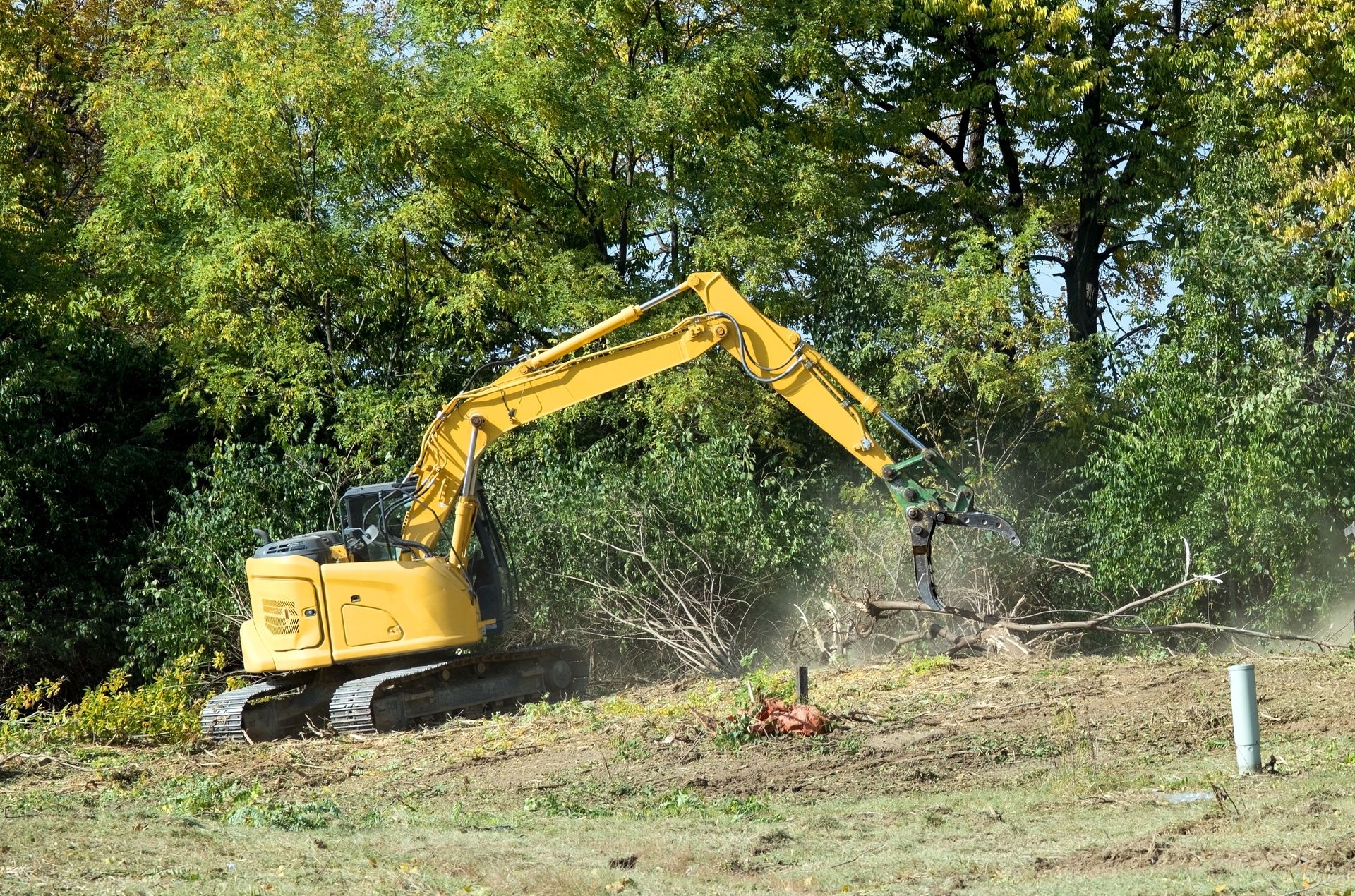
The most common methods of land clearing are grubbing and dozing, chainsaw and hand clearing, mulching (forestry mowing), bush hogging, and controlled burning.
Choosing the right method for your property depends on the scope of your project and its topography.
While heavy-duty construction projects with large trees and deep roots often require the brute force of bulldozers and grubbing, lighter agricultural needs or selective clearing can be handled more cost-effectively through bush hogging or forestry mulching.
Beyond preparing the ground for development, strategic land clearing is essential to allow proper grading, drainage, and access for construction vehicles.
Land clearing also improves overall property aesthetics, reduces wildfire risks by removing dried kindling, and effectively eliminates invasive plant species and weeds.
In this guide, you’ll learn about each method of land clearing and when it’s recommended based on local conditions and environmental regulations.
The Importance of Land Clearing
Land clearing is the critical first step for any major development, agricultural project, or construction site that requires heavy land use and transformation.
By clearing away overgrowth and debris, the process smooths out and stabilizes the terrain, making it ready to be tilled, excavated, graded, and seeded.
Beyond preparing the ground for development, strategic land clearing is essential to ensure proper site access points for heavy machinery and to establish adequate stormwater drainage channels.
Additionally, routine vegetation control offers several long-term benefits for the property:
- Prevents structural hazards: Keeps unchecked roots and overgrowth from damaging retention ponds or diverting stormwater runoff away from intended traps.
- Reduces wildfire risks: Lowers the risk of fires across the worksite by completely removing dried kindling and brush.
- Eliminates pests and invasive species: Destroys thick weed growth and invasive plant species that crowd your site and harbor unwanted pests.
- Boosts property value: Enhances overall aesthetics, site safety, and the long-term resale value of the landscape.
Common Obstacles That Require Special Equipment
Successful land development requires identifying and clearing specific property hazards before construction can begin.
The most common site obstacles that require specialized land-clearing equipment include:
- Trees, stumps, and deep roots
- Shrubs, underbrush, and dense weeds
- Rocks, stones, and buried debris
- Old structures or abandoned foundations
5 Common Methods of Land Clearing
Selecting the right land-clearing method depends on several factors, including the obstacles present, your intended land use, and your available resources. The five most common types of projects include:
1. Grubbing and Dozing
Grubbing and dozing combine using a bulldozer to remove trees and large vegetation and a grubbing attachment (like a root rake) to dig out stumps and roots.
This method is effective for clearing areas where complete removal of all plant material is required, such as forested areas or thick brush.
Due to the scale and machinery involved, grubbing and dozing will require assistance from a professional land-clearing company.
While it provides thorough clearing of both surface vegetation and underground roots, it can disturb the soil and lead to erosion if not managed properly.
Ultimately, this approach is best for large-scale land-clearing projects, especially where root systems must be completely removed to prevent regrowth.
2. Chainsaw and Hand Clearing
Chainsaw and hand clearing is a DIY approach using chainsaws, machetes, and other handheld tools to cut down trees and brush. This method is typically used for small areas or in places where heavy machinery cannot be easily accessed or where such tools are not available.
This manual method is highly cost-effective, minimizes soil disturbance, and allows you to clear land in hard-to-reach areas.
However, it is also highly labor-intensive, time-consuming, dangerous, and requires proper skill to execute safely.
Given these limitations, hand clearing is best for small lots where only specific vegetation needs to be removed and is completely unsuitable for large-scale projects such as major construction.
3. Mulching or Forestry Mowing
Mulching, also known as forestry mowing, involves using a specialized machine (a mulcher or forestry mower) to grind trees, shrubs, and other vegetation into mulch. The mulch is left on the ground to decompose naturally, adding organic matter back to the soil.
This method excels at recycling vegetation and is highly useful for managing thick brush, such as bushes and small trees.
It is best used to clear underbrush, small trees, and other vegetation in areas where soil conservation and minimal disturbance are top priorities, such as forest trails, firebreaks, or pasture restoration.
Keep in mind that mulching is less effective for removing large trees or deeply rooted stumps than dozing, and it is typically not suited for large-scale development projects.
4. Bush Hogging
Bush hogging–similar to mulching–uses a heavy-duty rotary mower attached to a tractor to cut down tall grass, weeds, and light brush and then recycle the mulch on the ground. This method is particularly effective for clearing overgrown fields, pastures, and large areas with thick undergrowth.
It offers an efficient and cost-effective way to manage large areas of overgrown grass and weeds, maintaining open land by cutting back growth and preventing the spread of invasive plants.
It is best suited for fields, pastures, roadways, or any large, flat areas with light brush that need periodic maintenance.
However, bush hogging is not suitable for rough terrain or areas with large trees and heavy brush. It may also leave behind stumps and roots, which can make the ground uneven and unsuitable for certain types of development.
5. Controlled Burning
Controlled burning is an old form of land clearing where a fire is intentionally set and managed to remove excess vegetation. This method has been used for centuries to clear land for agriculture and to manage forests, and it requires careful planning and supervision.
As a clearing method, it is highly cost-effective and can cover massive areas very quickly. It is best reserved for large, open environments where fire can be safely contained and controlled, such as grasslands, savannas, or forests in need of ecological regeneration.
Despite its efficiency, the inherent risk of the fire spreading uncontrollably—especially in dry or windy conditions—makes this method highly dangerous and often not recommended for standard development projects.
Land Clearing Methods Comparison Table
The following table can help you choose the right land clearing method based on the obstacles present and the scale of your land development project.
| Land-Clearing Method | What It Removes | Best Used For |
| 1. Grubbing and Dozing | Trees, large vegetation, stumps, and deep roots. | Large-scale development projects where root systems must be completely eradicated. |
| 2. Chainsaw and Hand Clearing | Individual trees, brush, and specific selective vegetation. | Small lots with specific vegetation to remove, or hard-to-reach areas where heavy machinery cannot access. |
| 3. Mulching or Forestry Mowing | Underbrush, shrubs, small trees, and surface vegetation. | Underbrush, small trees, and areas where soil conservation is a priority (e.g., forest trails, firebreaks). |
| 4. Bush Hogging | Tall grass, weeds, and light undergrowth/brush. | Large, flat areas like overgrown fields, pastures, and roadways that require periodic maintenance. |
| 5. Controlled Burning | Excess surface vegetation, weeds, and brush across wide areas. | Massive, open environments like grasslands, savannas, or agricultural plots needing regeneration. |
Choosing the Right Land Clearing Method
To choose the right land clearing method, it’s essential to evaluate your needs and specific project requirements.
- Land Area Size: Larger areas require more specialized machinery, such as bulldozers, mulchers, and mowers, while smaller areas can be tackled with chainsaws and rotary mowers. The size of the area will also determine which land-clearing method provides the least cost for tools and labor added up.
- Type of Vegetation: Thicker vegetation will require heavier equipment, such as bulldozers and excavators, while grass and weeds can be tackled with chainsaws, rotary mowers, etc.
- Intended Use: Construction projects that require foundation laying will necessitate bulldozing and grubbing, while agricultural and residential projects may only require bush hogging or mulching.
- Environmental Impact: In some cases, the environmental impact of each land-clearing method may be analyzed to determine which is right for you.
To get help choosing the right land-clearing method, work with a qualified environmental management company that specializes in land clearing.
FAQs
What is the most cost-effective method of land clearing?
The cost-effectiveness depends on the size of the land, the type of vegetation, and the desired end result. Generally, mulching is cost-effective for small to medium-sized areas, while bulldozing or controlled burning may be more economical for larger areas.
Is land clearing environmentally safe?
Some methods, such as mulching, are environmentally friendly because they reduce soil disturbance and promote natural decomposition. Others, like bulldozing or chemical clearing, may have negative environmental impacts if not properly managed.
Is a permit required for land clearing?
Depending on the location and the method used, a permit may be required. It’s essential to check with local authorities to ensure compliance with regulations.
How long does the land-clearing process typically take?
The timeline depends heavily on the acreage, vegetation density, and the chosen clearing method. Hand clearing a small lot might take several days of manual labor, whereas a professional crew using heavy machinery such as bulldozers or mulchers can often clear multiple acres in a single day.
What should I do with the debris after the land is cleared?
Property owners have several options for managing leftover material, depending on their project goals and local regulations. Mulched material can be left on-site to enrich the soil and prevent erosion, while larger logs and stumps from dozing can be hauled away, buried, or processed into firewood.
Will land clearing affect the value of my property?
Clearing a plot of land generally increases its market value by making it immediately usable and visually appealing to potential buyers. Removing dense underbrush and hazardous trees reveals the lot’s true topography, showcasing its development potential and saving future owners the upfront cost of site preparation.
Can I clear my land myself, or should I hire a professional?
Small projects involving light brush or a few small trees can often be handled safely as a DIY project using standard handheld tools. For large-scale developments, dense forests, or projects requiring deep root removal, hiring a professional land-clearing company ensures the job is done safely and efficiently with commercial-grade machinery.