
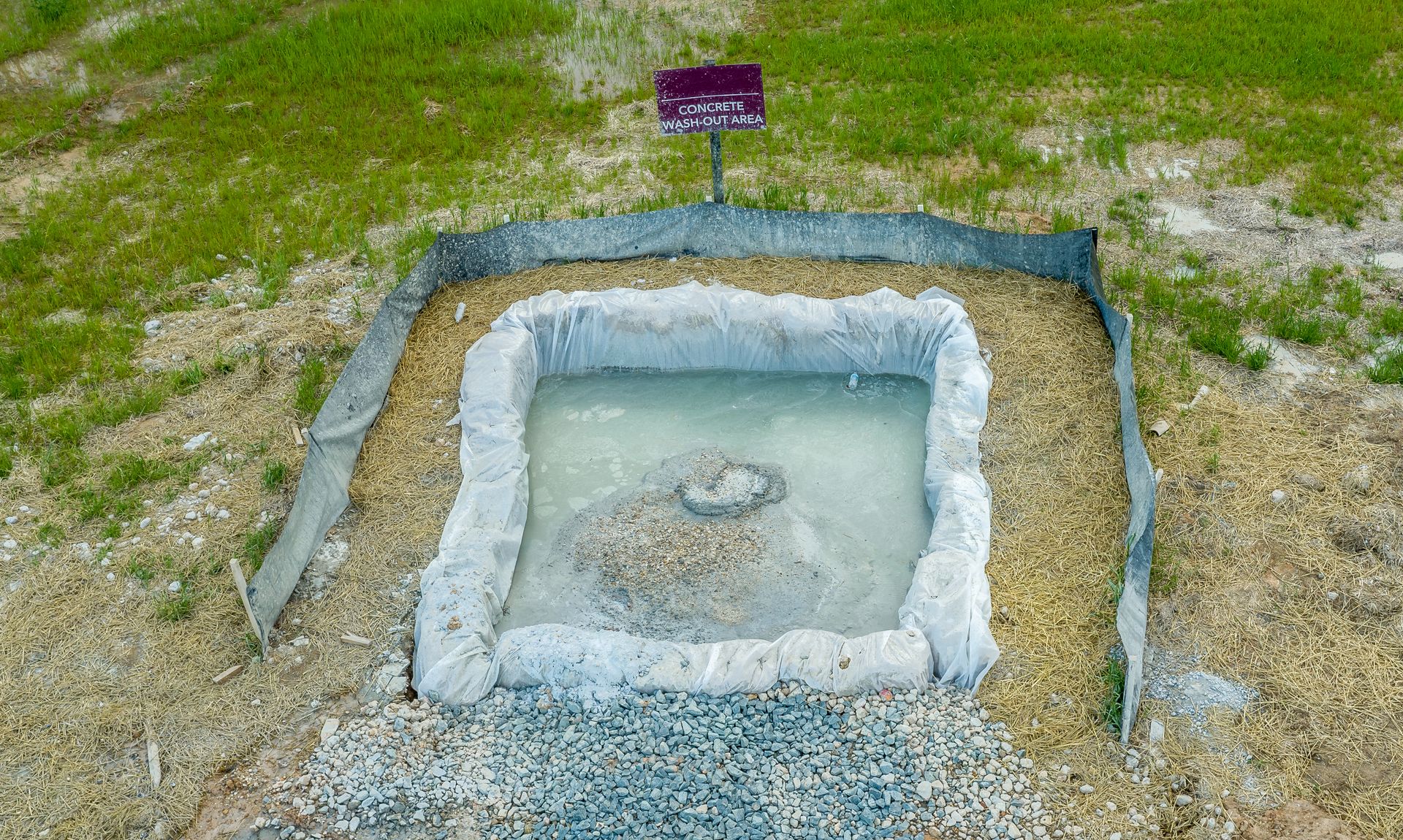
Concrete washouts prevent toxic, highly alkaline wastewater and heavy solids from contaminating local water supplies, making them an essential part of a stormwater management plan.
When concrete tools, chutes, and equipment are washed down, the resulting slurry carries a high pH level that can destroy aquatic ecosystems, leach into groundwater, and violate federal EPA and local environmental regulations.
By capturing this wastewater in dedicated containment systems, such as leak-proof metal containers, vinyl bins, or plastic-lined pits, job sites can prevent chemical runoff and maintain compliance with their Stormwater Pollution Prevention Plan (SWPPP).
In this guide, you’ll learn how concrete washouts fit into your overall SWPPP strategy, the different types of washout containers available, and key best management practices (BMPs) to keep your construction site safe and compliant.
What Is a Concrete Washout?
A concrete washout is a mandatory, environmentally safe process for cleaning concrete equipment such as mixer trucks, chutes, pumps, and hand tools at the end of a pour.
This essential BMP prevents toxic wastewater, heavy solids, and slurry from contaminating the job site and surrounding environment.
When concrete equipment is rinsed, the runoff produces wastewater that is heavily laden with unhardened concrete residue. This runoff has a high alkaline content, frequently reaching a pH between 11 and 12, making it nearly as caustic as liquid household drain cleaner.
Without proper containment, this slurry can seep into soil or enter storm drains, posing a serious threat to groundwater and aquatic ecosystems.
How Does the Concrete Washout Process Work?
The concrete washout process is a structured sequence designed to safely clean equipment while capturing wastewater before it can contaminate a job site.
1. Equipment Rinsing
Immediately following a concrete pour, high-pressure water is used to rinse chutes, hoppers, pump trucks, wheelbarrows, and hand tools. This step removes fresh, uncured concrete before it hardens onto the equipment, protecting tools from permanent damage.
2. Slurry Containment
Rather than allowing the runoff water to flow onto bare soil or into local storm drains, all wastewater and concrete slurry are directed into leak-proof containment units. Depending on the size of the operation, sites use metal washout bins, heavy-duty vinyl containers, or plastic-lined washout pits.
3. Solid and Liquid Separation
Once trapped in the container, heavy aggregate, gravel, and sand settle to the bottom. Over time, the free water on top is allowed to evaporate naturally, neutralized with chemical additives (such as carbon dioxide or acid) to lower its pH, or pumped out and hauled to an authorized water treatment facility.
4. Material Disposal and Recycling
After the water has evaporated or been treated, the remaining solid concrete material hardens into concrete washout blocks or aggregate slabs. These hardened solids are removed from the containment bin and transported to a recycling facility, where they are crushed into recycled concrete aggregate (RCA) for use as a future base material.
The Importance of Concrete Washouts in an SWPPP
Concrete washouts help protect valuable construction equipment from damage and allow site managers to dispose of any excess mixture properly.
If the concrete washout slurry is dumped on the ground or mixed with stormwater runoff, it can cause water contamination, soil degradation, and groundwater toxicity.
Proper concrete washout handling is essential for several reasons:
- Protects local ecosystems: Concrete and cement are highly alkaline mixtures that can raise the pH of any water they come into contact with to dangerous levels. Rainwater polluted with concrete washwater can percolate down through the soil and alter the soil chemistry, inhibit plant growth, and contaminate the groundwater.
- Protects local infrastructure: Concrete washouts can easily be washed away into nearby roads and buildings, where they can harden or damage local infrastructure.
- Reduces the risk of flooding: The heavy materials in the concrete slurry can block storm inlet drains and prevent stormwater runoff from discharging properly.
- Keeps construction sites safe: Proper disposal of concrete washout materials helps keep your construction site grounds free of leftover materials that can pose a tripping hazard.
- Ensures local compliance: Proper concrete washout management helps you comply with local, state, and federal regulations.
Types of Concrete Washout Containers
Since concrete tends to harden very quickly, most construction companies prefer to perform concrete washouts on-site at the end of each day of use.
Different types of washout containers are available for collecting, retaining, and recycling concrete wash water and solids generated during the washout of mixed-truck chutes and pump-truck hoppers at construction sites. Selecting the right one depends on your budget and usage.
- Hay bale and plastic washout pit: An economical and temporary solution, typically used for small to medium-sized projects. It consists of hay bales lined with plastic to create a containment area for wash water and solids.
- Vinyl washout container: A flexible, reusable option ideal for medium- to large-sized projects. It is lightweight, easy to set up, and can be moved around the site as needed.
- Metal washout container: A durable, long-lasting option suitable for large projects or repeated use. These containers are sturdy, can hold large volumes of wash water and solids, and are often equipped with lids to prevent spillage.
- Chute washout bag or box: A compact, portable option, perfect for small projects or confined spaces. These bags or boxes are designed to attach directly to the chute, efficiently capturing wash water and solids.
Concrete Washout Best Management Practices
Implementing strict Best Management Practices (BMPs) prevents hazardous concrete slurry from entering stormwater runoff, ensuring environmental protection and regulatory compliance at every job site.
To maintain compliance and protect local ecosystems, construction crews should follow these core management practices:
- Collect and Contain Wastewater: Retain all concrete washout water and heavy solids in certified, leak-proof containers to prevent caustic chemicals from penetrating topsoil or migrating into groundwater and surface water.
- Recycle Washout Material: Aim to recycle 100 percent of collected wastewater and concrete solids. Recycling reduces the demand for raw aggregate extraction and minimizes total site waste.
- Inspect Containment Facilities: Conduct daily inspections of washout structures, especially following heavy rainfall, to identify leaks or damage to plastic liners and structural sidewalls early.
- Maintain Capacity Thresholds: Vacuum liquid waste from containers once they reach 75 percent capacity to maintain an adequate freeboard safety margin and prevent accidental overflows.
- Cover During Rain Events: Secure impermeable tarps or covers over washout containers before and during storms to prevent rainfall from filling units and causing hazardous runoff.
Naturally, these BMPs should be formally integrated into your Stormwater Pollution Prevention Plan (SWPPP) and communicated across all crew members to ensure full site compliance.
By combining proper equipment containment, routine facility inspections, and proactive material recycling, contractors can effectively eliminate runoff risks, maintain compliance with EPA regulations, and protect local watersheds from caustic environmental damage.
FAQs
Can concrete washout water be recycled?
Yes, concrete washout water can be effectively recycled on-site or at a batch plant. Through settling and chemical treatment to lower its high pH, the treated washwater can be reused in future concrete mixing batches, conserving municipal freshwater resources and eliminating off-site hazardous discharge.
How do you set up a concrete washout area?
Setting up a concrete washout area begins with choosing a level site situated at least 50 feet away from storm drains, open water bodies, and natural drainage paths. Once selected, crews install a leak-proof containment structure, such as a plastic-lined pit, vinyl basin, or prefabricated metal bin, and surround it with clear signage and secure perimeter controls.
Finally, the area must remain easily accessible to concrete trucks and be inspected daily to ensure the lining and walls remain undamaged.
How do you dispose of concrete washout material?
Concrete washout material is disposed of by first separating the liquid and solid components. In smaller setups, washwater is allowed to evaporate naturally, leaving behind hardened concrete residue that can be broken up and transported to a recycling facility or landfill.
For larger commercial sites, contractors often utilize a licensed industrial waste disposal service to vacuum out liquid slurry and haul the materials away in full compliance with local environmental regulations.
What is the pH of concrete washout water?
Concrete washout water typically has an extremely high pH of 11-12, making it strongly alkaline and hazardous. This level of caustic acidity is comparable to that of household ammonia or liquid drain cleaner, which is why raw washout water must never come into direct contact with bare soil or stormwater runoff.
How far should a concrete washout be from storm drains?
A concrete washout facility should be located at least 50 feet away from storm drain inlets, surface waters, wetlands, and drainage ditches. Maintaining this distance creates a buffer zone that prevents accidental splashes, leaks, or rainwater overflows from reaching local waterways.
What happens if you dump concrete washout on the ground?
Dumping concrete washout directly onto the ground causes severe environmental damage by spiking topsoil pH, killing native plants, and destroying beneficial soil organisms. Over time, heavy metals and caustic chemicals within the uncontained slurry can leach deep into the ground, permanently contaminating local groundwater aquifers and surrounding soil.
Who is responsible for concrete washout compliance on a construction site?
The general contractor and the designated site SWPPP manager are primarily responsible for ensuring compliance with concrete washout requirements on a construction project. They must ensure that proper containment facilities are installed, that subcontractors and concrete delivery drivers use the designated areas, and that daily inspections are documented to satisfy EPA regulations.