Benefits of Erosion Control Wattles vs. Silt Fences

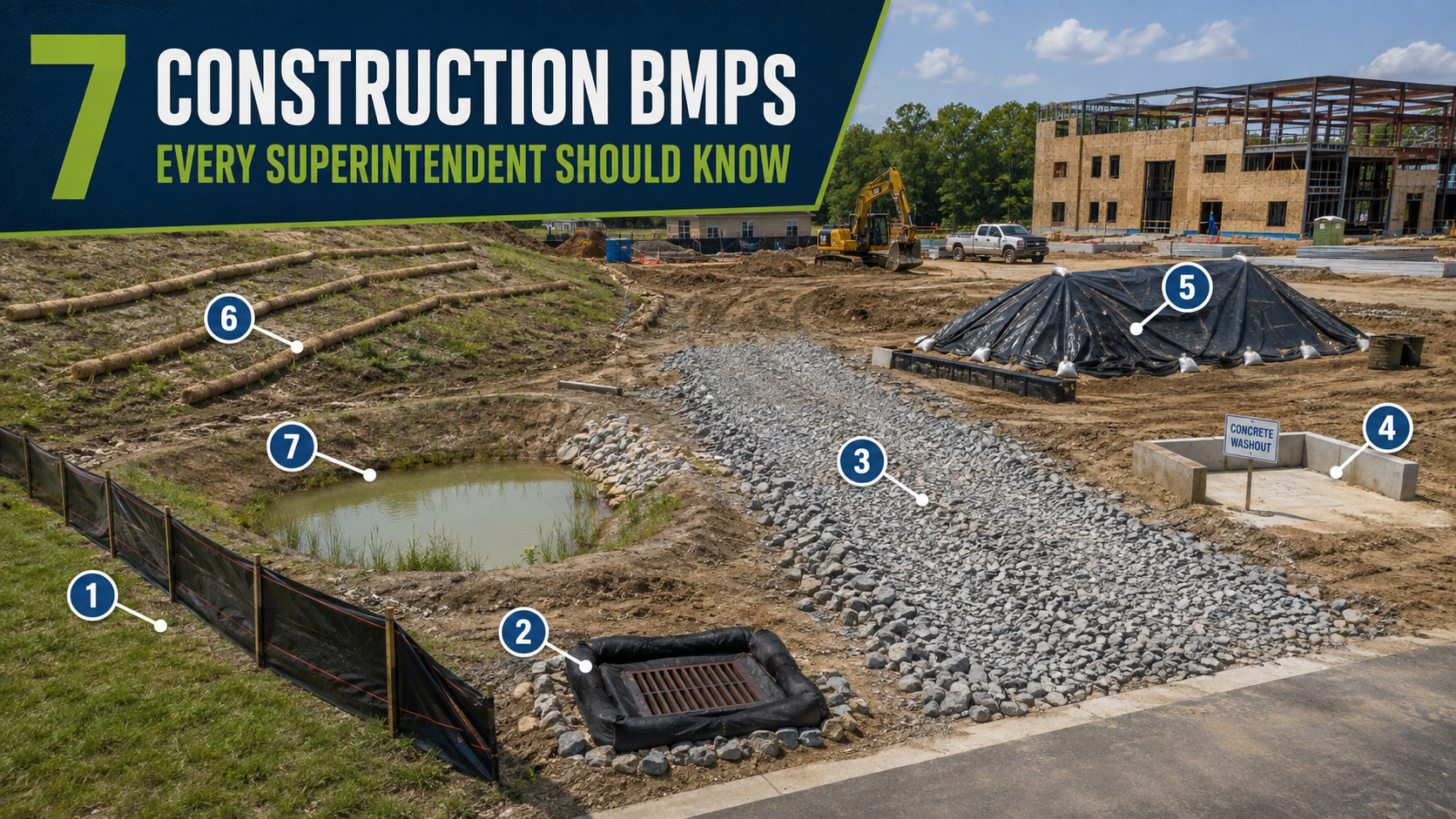
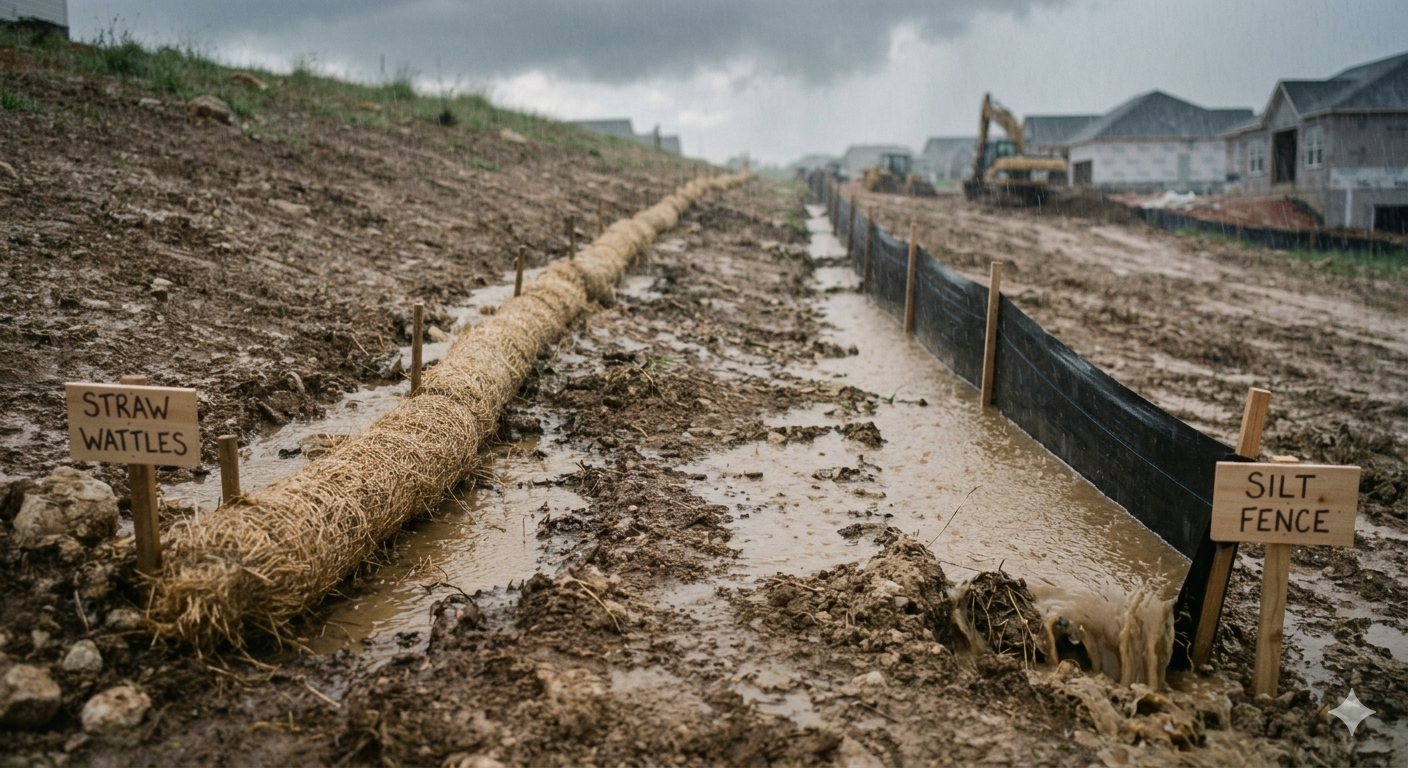
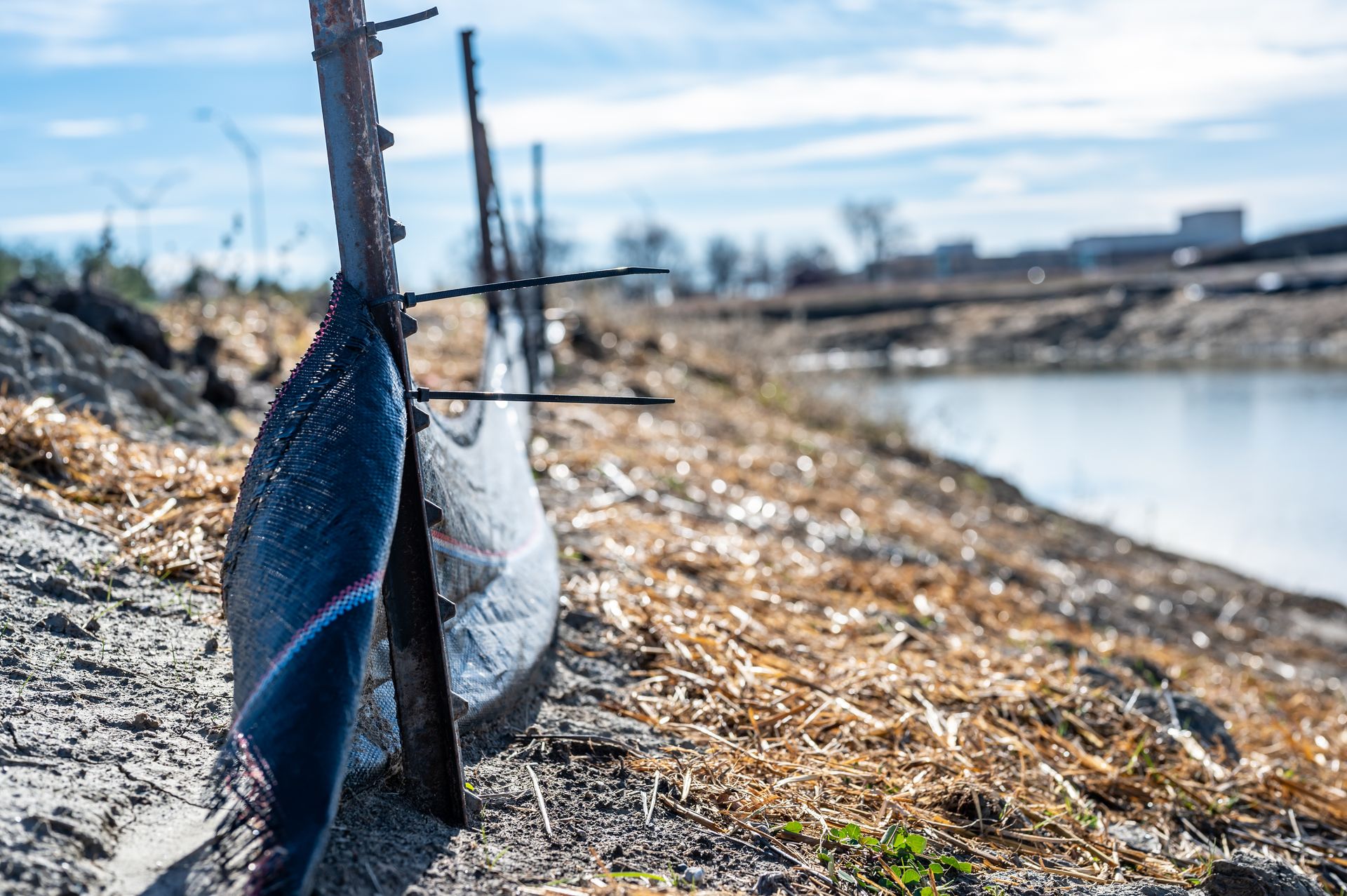
Erosion control wattles outperform silt fences on steep slopes, rocky or irregular terrain, and low-velocity drainage channels where trenching a fence is impractical or prohibited.

While silt fences provide higher sediment storage on flat perimeters, wattles offer superior flexible ground contact, reduce runoff velocity, and biodegrade in place to eliminate removal costs.…

read more
How to Prevent Soil Erosion on a Construction Site

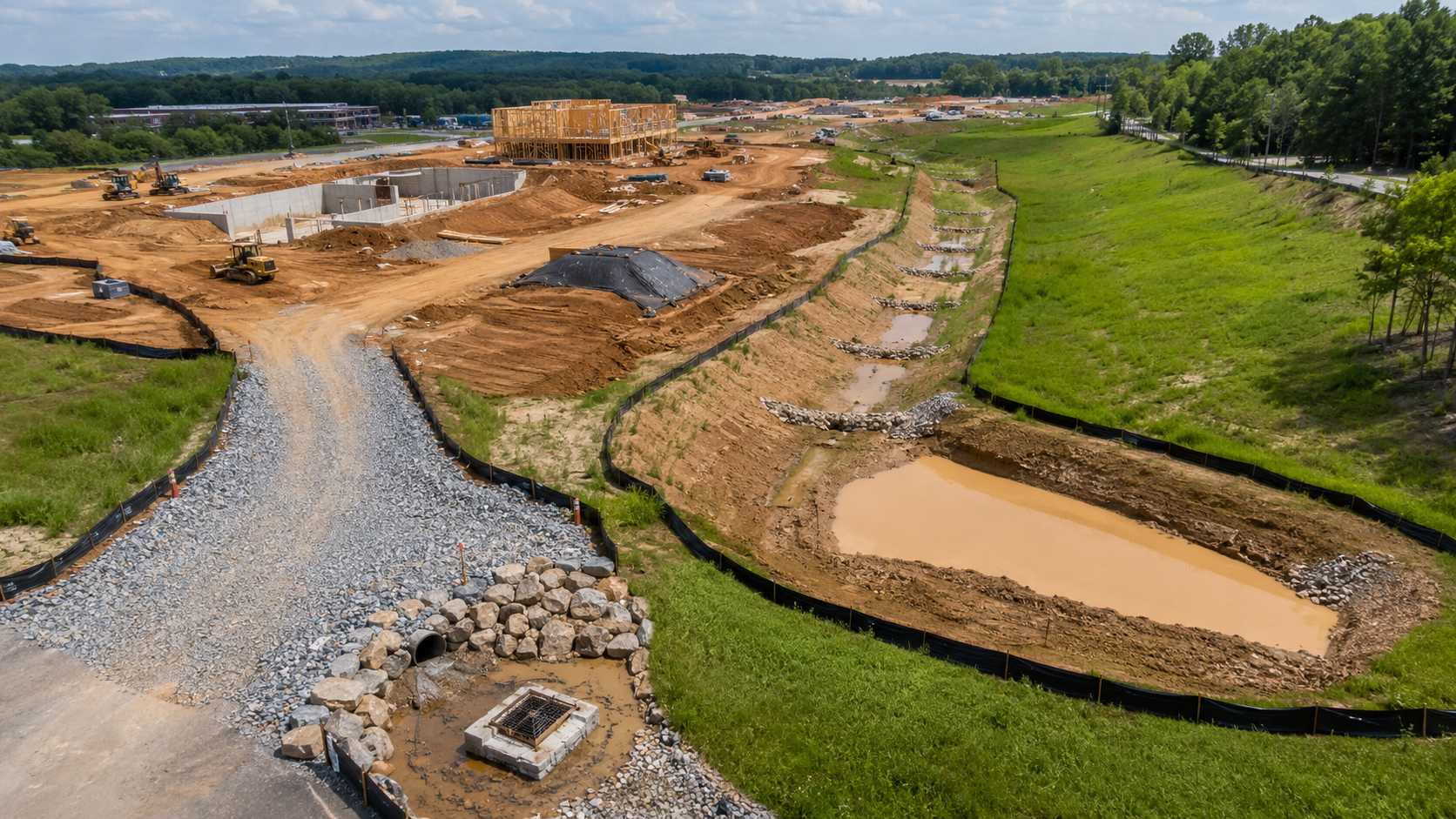
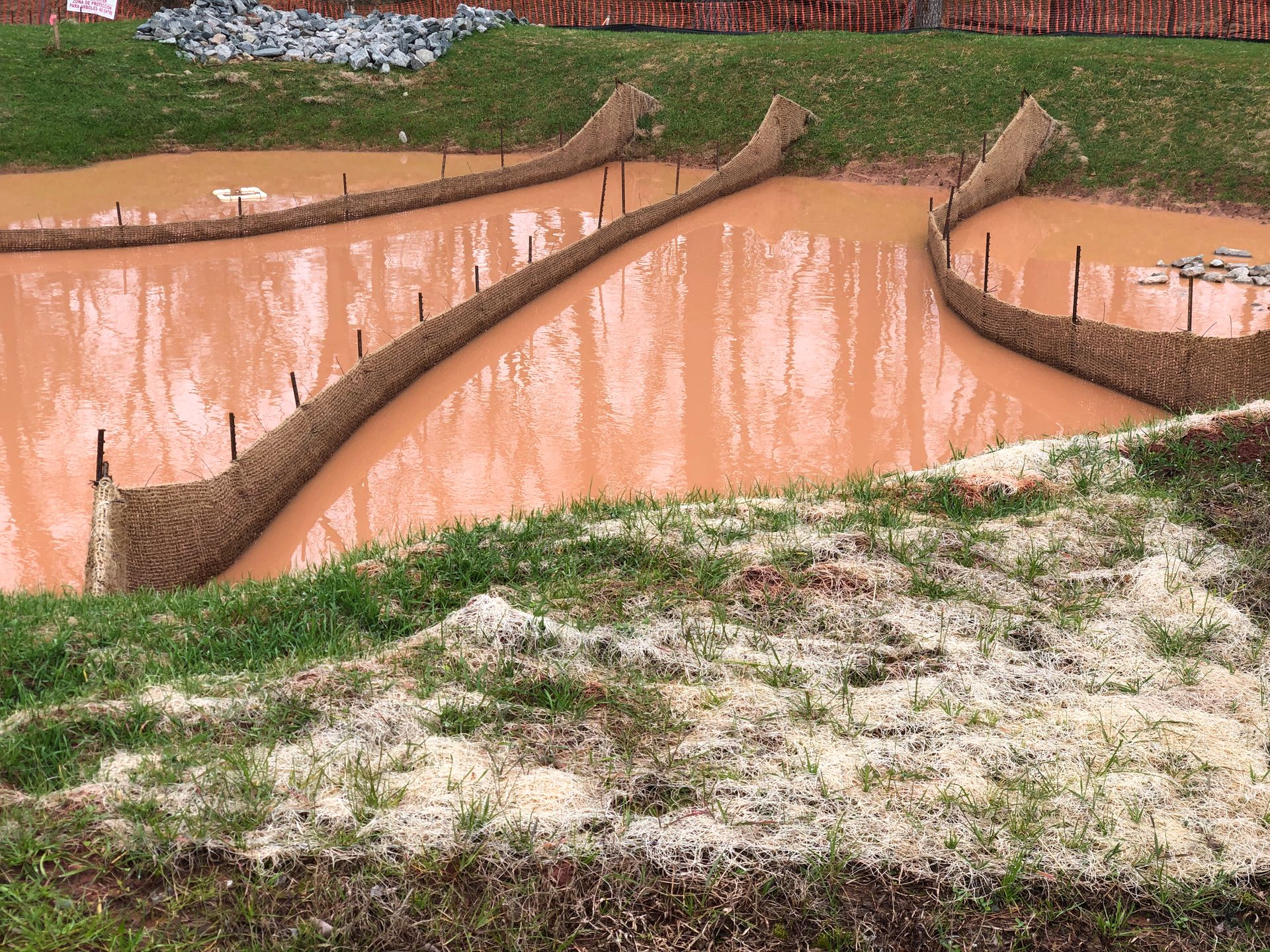
To prevent soil erosion on a construction site, combine temporary ground cover controls, such as erosion control blankets and silt fences, with permanent stabilization measures like hydroseeding and vegetative cover.

These techniques keep the soil intact, preventing loose sedimentation, while also filtering any sediment particles before they are discharged from the site.…

read more

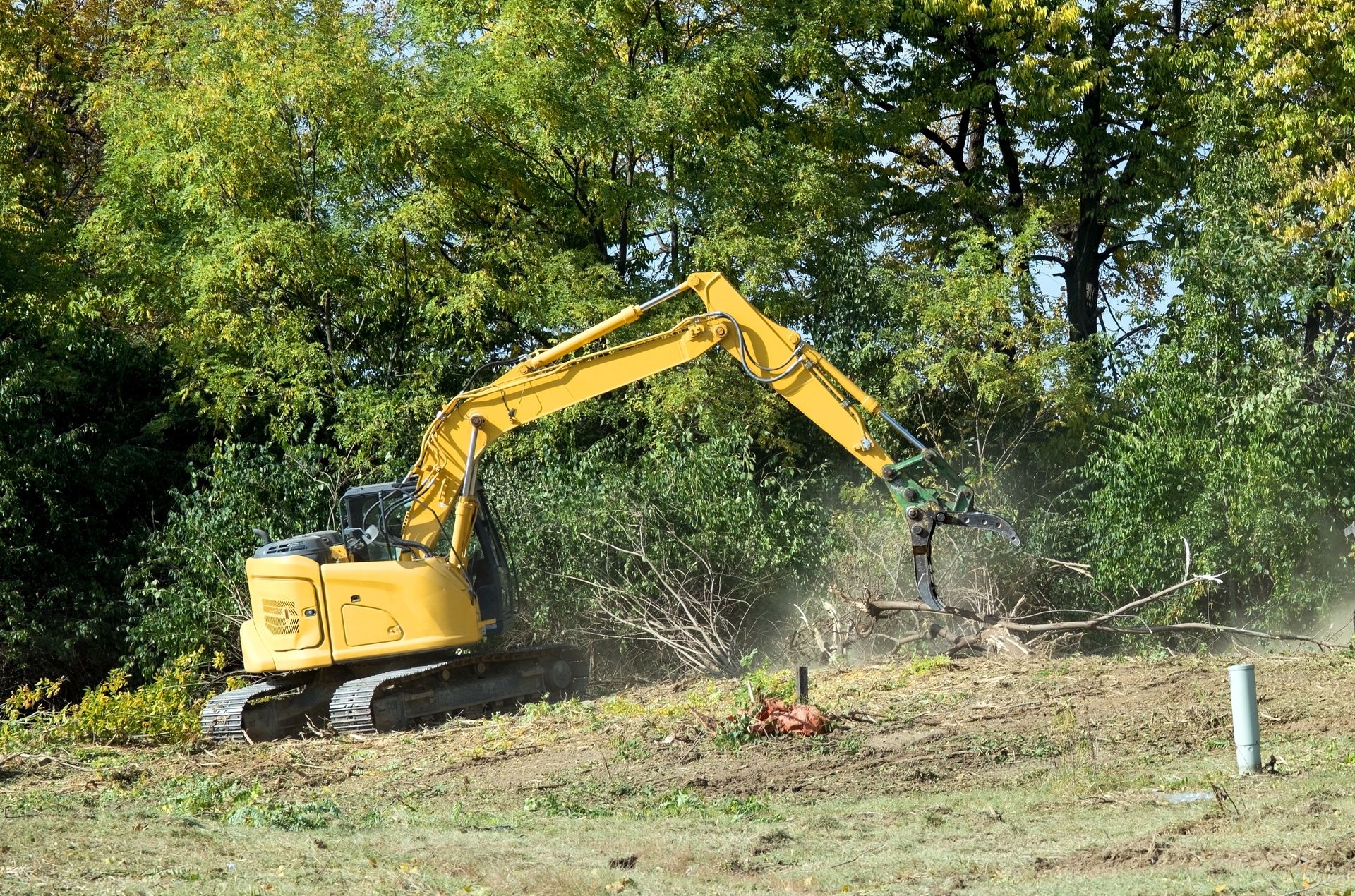
What Is the Cost of Land Clearing? 5 Factors to Consider

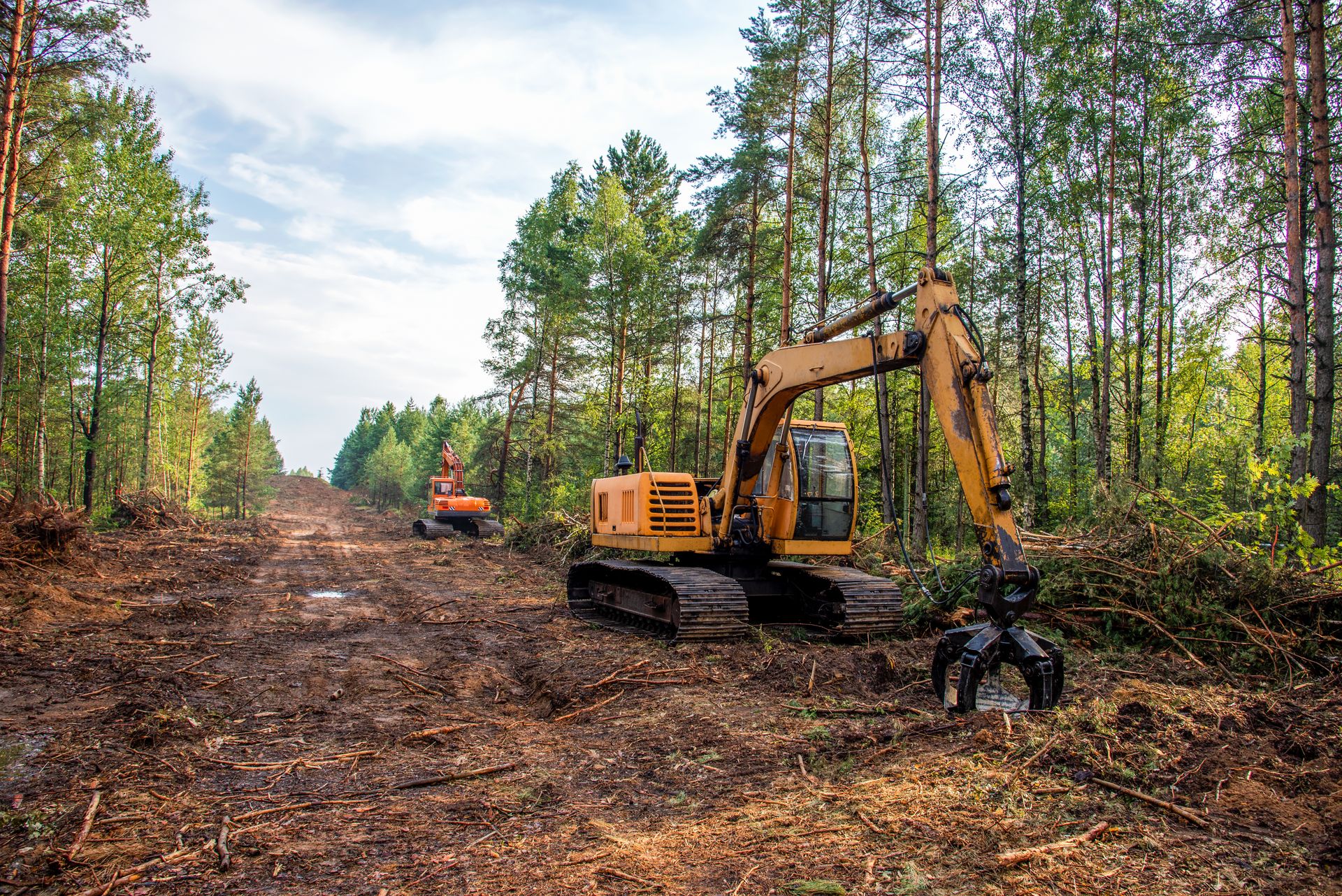
The average cost to clear land ranges from $1,395 to $6,167 per acre, with smaller, lightly wooded plots costing a few hundred dollars and dense, steep, two-acre parcels exceeding $10,000.

Total project costs depend heavily on a mix of terrain, equipment, and labor variables:

  • Site Characteristics: Plot size, slope gradient, and accessibility directly influence project scope.
read more

The Importance of Concrete Washout in Stormwater Management

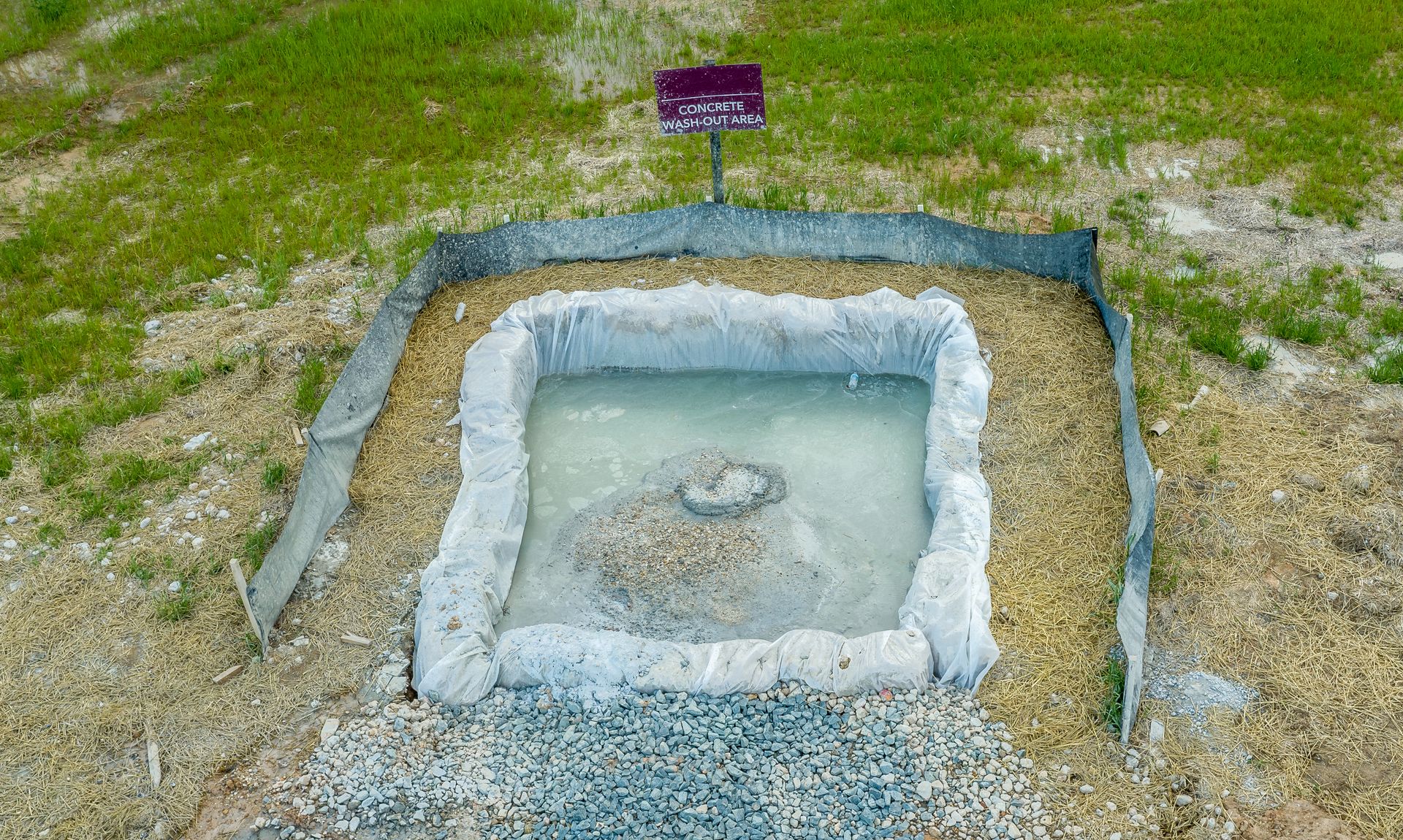
Concrete washouts prevent toxic, highly alkaline wastewater and heavy solids from contaminating local water supplies, making them an essential part of a stormwater management plan.

When concrete tools, chutes, and equipment are washed down, the resulting slurry carries a high pH level that can destroy aquatic ecosystems, leach into groundwater, and violate federal EPA and local environmental regulations.…

read more

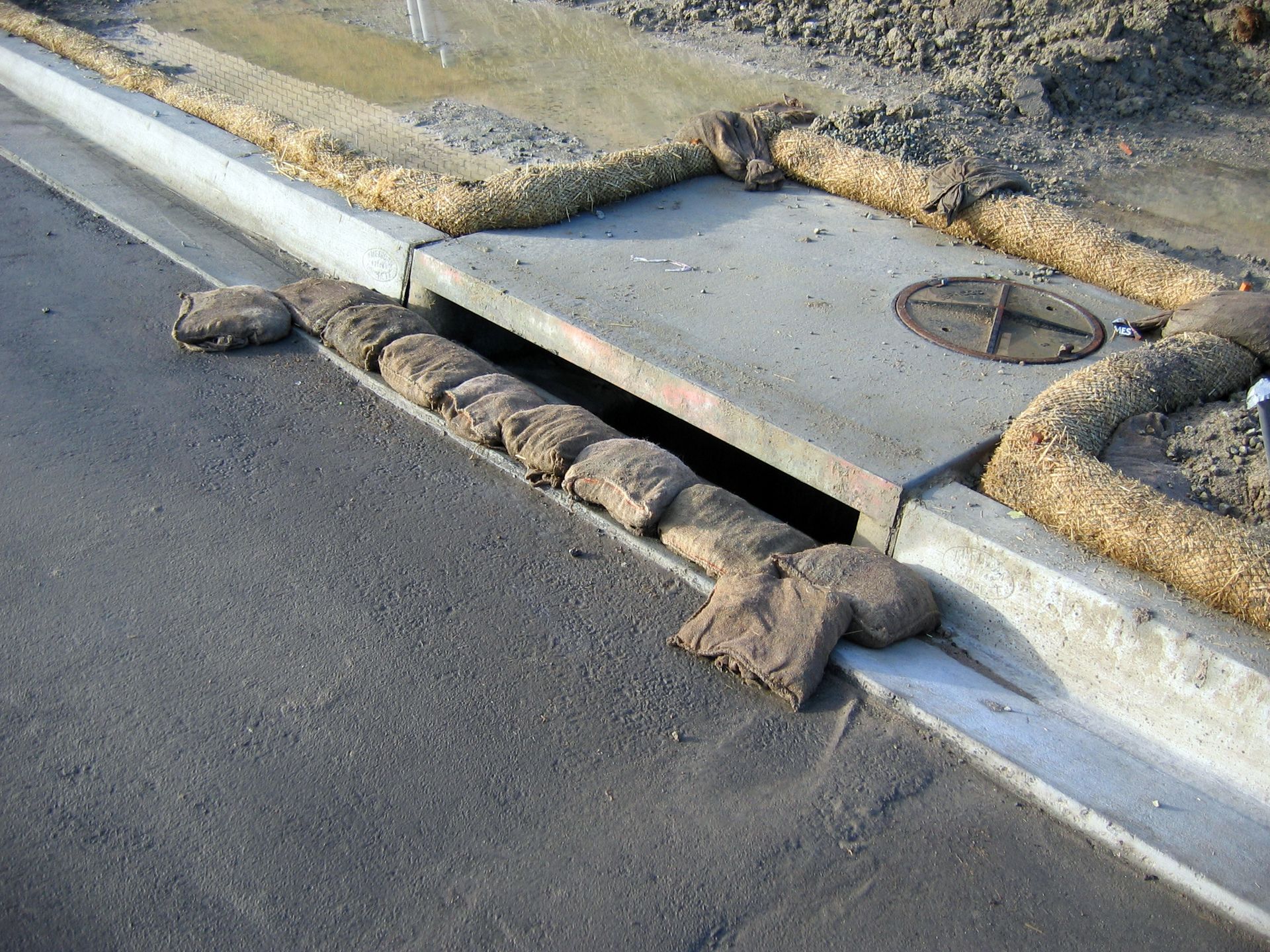
5 Best Practices for Stormdrain Inlet Protection

Storm drain inlet protection is a temporary or permanent sediment barrier designed to filter out debris, sediment, and pollutants from stormwater runoff before it enters catch basins, curb inlets, or storm sewer systems.

Typically implemented as part of a construction Stormwater Pollution Prevention Plan (SWPPP), these protective devices allow water to pass through while trapping silt, trash, and heavy sediment.…

read more

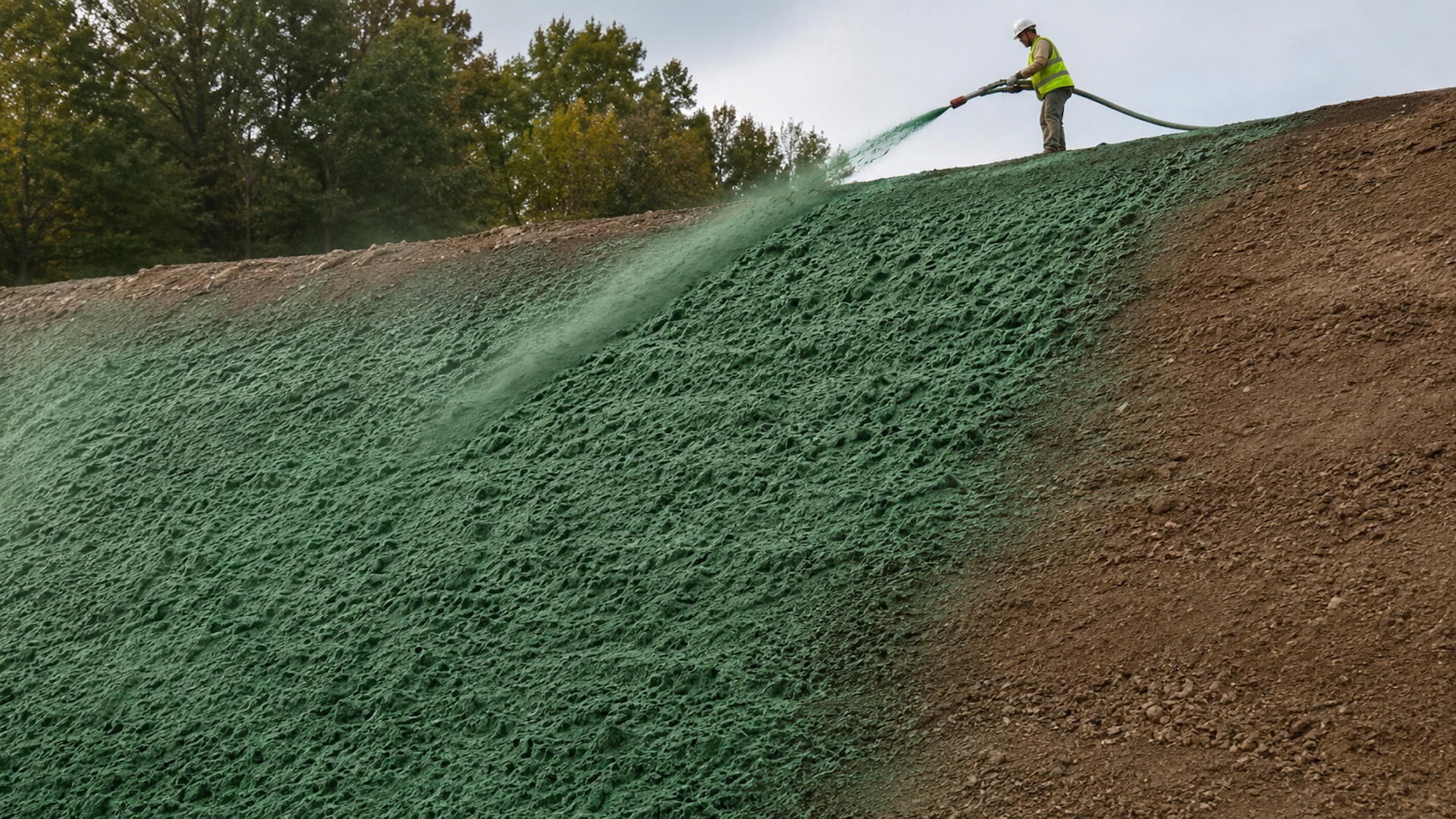
Types of Hydroseeding Explained: Bonded Fiber Matrix

A bonded fiber matrix (BFM) is a hydraulically applied erosion-control product composed of thermally refined wood fibers, cross-linking hydrocolloid tackifiers, and protective binders.

Upon drying, these components chemically bond to create a continuous, highly porous, and water-resistant mat that anchors directly to the soil surface.…

read more