
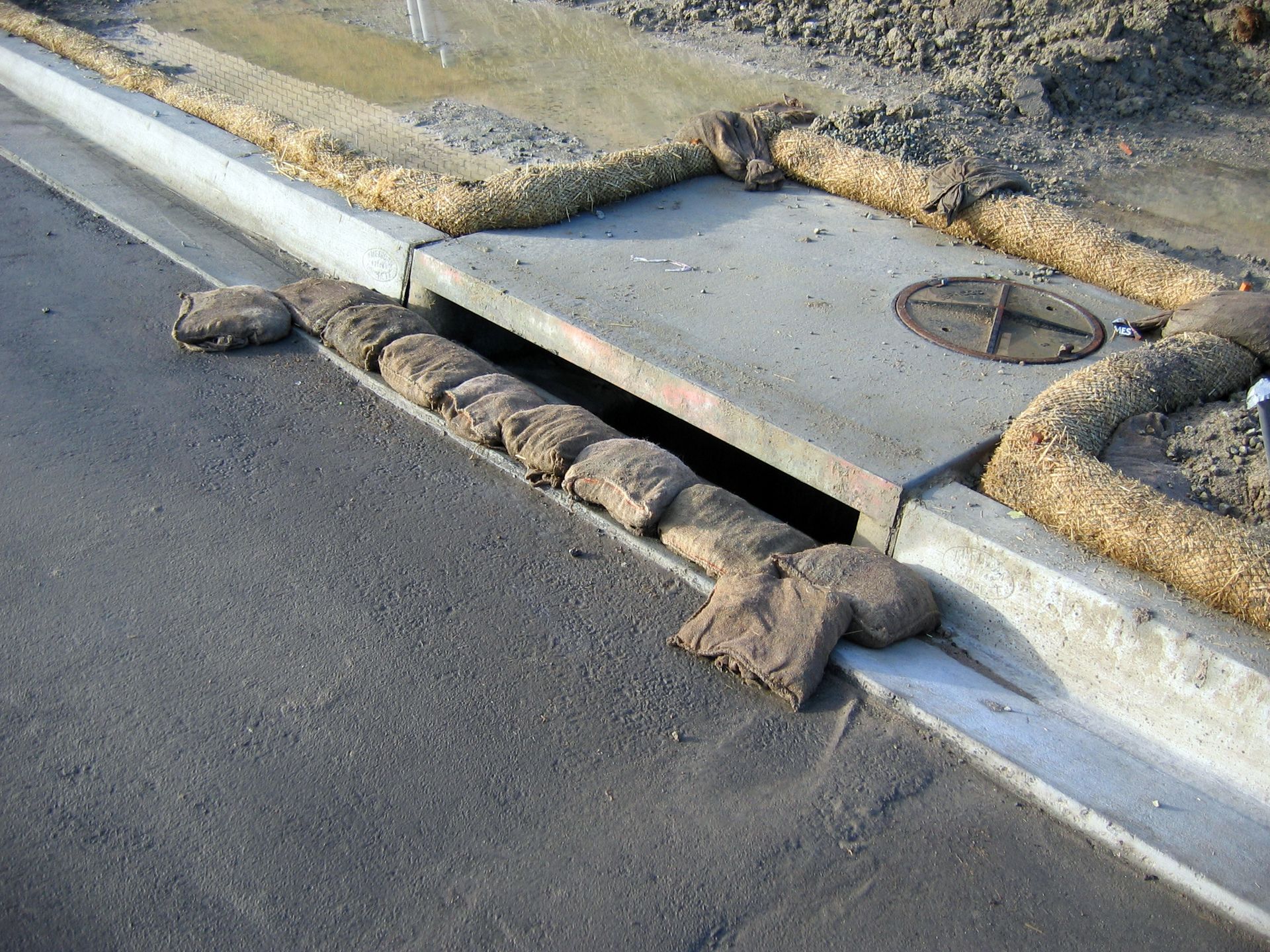
Storm drain inlet protection is a temporary or permanent sediment barrier designed to filter out debris, sediment, and pollutants from stormwater runoff before it enters catch basins, curb inlets, or storm sewer systems.
Typically implemented as part of a construction Stormwater Pollution Prevention Plan (SWPPP), these protective devices allow water to pass through while trapping silt, trash, and heavy sediment.
Storm drain inlet protection is an essential part of an SWPPP for many reasons:
- Reduces Water Pollution: It intercepts soil particles and contaminants at the point of entry, preventing them from polluting local ecosystems and reducing water turbidity.
- Prevents Localized Flooding: By capturing coarse debris before it enters the pipes, inlet protection prevents internal clogs that cause water to back up and flood streets or construction sites.
- Ensures Regulatory Compliance: Properly installed and maintained inlet protection helps site operators meet federal, state, and local environmental regulations, preventing costly penalties and project shutdowns.
In the realm of stormwater management, the storm drain inlet serves as the final juncture between runoff and public surface waters. Protecting this critical entry point is essential to maintaining both environmental quality and structural safety.
In this guide, you will learn how storm drain inlet protection fits into your overall stormwater management strategy, explore the most common types of devices, and outline best practices for keeping your drainage system clear, compliant, and highly efficient.
What Is Inlet Protection?
Inlet protection is a stormwater best management practice designed to prevent sediment and other pollutants from entering stormwater inlets.
Stormwater inlets, also known as catch basins or storm drains, are openings in the ground designed to collect and convey runoff to stormwater systems.
Without proper protection, these inlets can become clogged with debris, reducing their efficiency and leading to localized flooding.
Additionally, unprotected inlets allow pollutants to enter stormwater systems, contributing to water quality issues, such as turbidity and pollution.
The Importance of Storm Drain Inlet Protection
As most construction sites are located on impervious surfaces or drain to them, the curb inlet becomes the final, and one of the only, defenses against pollutants or debris that may be picked up during a rain event.
While native soil and vegetation can absorb and slow the velocity of some stormwater runoff, when that runoff reaches impervious surfaces like pavement or rooftops, there is very little to stop it.
Unfortunately, the consequences of unmanaged stormwater runoff can be severe. Some effects can include flash flooding, erosion of stream banks, waterborne illnesses, and damage to aquatic habitats.
Effective stormwater management and drain inlet practices are essential to mitigating these impacts. Therefore, proper inlet protection is essential because it:
- Allows for additional filtration: Catch basins equipped with filtration systems and geotextile fabrics can prevent sediment and heavy pollutants from entering public discharge points.
- Prevents flooding: Allowing storm drains to flow freely will reduce the likelihood of them backing up during a flash-flood event.
Local habitats, ecosystems, soils, and infrastructure will benefit from proper inlet protection.
6 Types of Storm Drain Inlet Protection
The most common types of storm drain inlet protection include wattles, sediment bags, filter socks, inlet guards, gravel bags, and spill berms.
These specialized sediment barriers are designed to address varying flow rates, soil conditions, and site layouts on construction sites, preventing clogging and keeping runoff clean.
- Wattles: Cylindrical tubes filled with straw, coconut fiber, or similar materials, placed around storm inlets to filter sediment and slow water flow, preventing erosion and sediment buildup.
- Sediment Bags: Durable bags placed over or inside storm inlets to capture and contain sediment while allowing water to pass through. They are effective in high-flow areas and can be easily removed and cleaned.
- Filter Socks: Mesh tubes filled with compost, sand, or other filter media, placed around storm inlets to trap sediment and pollutants from runoff. They are flexible and can be adapted to fit various inlet shapes and sizes.
- Filter Inlet Guards: Manufactured guards made from geotextile fabric or other filtering materials, designed to fit over storm inlets to prevent debris and sediment from entering the drainage system while allowing water to flow through.
- Gravel Bags: Bags filled with gravel or crushed stone, placed around storm inlets to slow down water flow and filter out sediment and debris. They are effective for perimeter control and can be easily repositioned as needed.
- Spill Berms: Small, raised barriers made from soil, gravel, or synthetic materials, placed around storm inlets to divert and slow down water flow, reducing erosion and allowing sediment to settle before water enters the inlet.
5 Best Practices for Storm Drain Inlet Protection on Construction Sites
Effective inlet protection requires proper planning, installation, and maintenance to prevent clogs and ensure BMPs function properly. Here are five best practices for construction managers to ensure the success of inlet protection measures:
- Site Assessment: Conduct a thorough assessment of the site to identify potential pollutant sources and determine the most suitable inlet protection method. Consider factors such as the size of the drainage area, soil type, and flow rates.
- Correct Installation: Follow manufacturer guidelines and industry standards for installing inlet protection devices. Ensure that the devices are securely anchored and positioned to maximize their effectiveness.
- Regular Maintenance: Inlet protection devices require regular maintenance to remain effective. Inspect the devices frequently, especially after storm events, and remove accumulated sediments and debris. Replace damaged or worn-out devices as needed.
- Proper Disposal: Dispose of the collected sediment and debris in accordance with local regulations. Improper disposal can negate the benefits of inlet protection and contribute to environmental pollution.
- Education and Training: Provide training for construction crews and maintenance personnel on the importance of inlet protection and proper installation and maintenance techniques. Awareness and understanding of the role of inlet protection can improve compliance and effectiveness.
Other controls, such as street sweeping, may also help reduce debris that can clog storm drains and curb inlets.
Storm drain and curb inlet protection is essential to maintaining SWPPP compliance.
By following these best management practices and investing in the right controls, you can protect local ecosystems, avoid costly regulatory penalties, and keep your construction site operating smoothly and efficiently.
FAQs
What is inlet protection?
Inlet protection refers to various methods and devices used to prevent sediment, debris, and pollutants from entering stormwater drainage systems through storm inlets. It is an essential part of erosion and sediment control practices at construction sites and other areas prone to runoff.
How often should inlet protection devices be inspected and maintained?
Inlet protection devices should be inspected and maintained regularly, especially after significant rainfall events. Maintenance involves:
- Removing accumulated sediment and debris.
- Repairing or replacing damaged components.
- Ensuring that devices are properly positioned and functional.
Can inlet protection devices be reused?
Some inlet protection devices, such as gravel bags and filter socks, can be reused if they are in good condition. Others, like sediment bags, may need to be replaced after use, especially if they become heavily soiled or damaged.
What are the main benefits of using storm drain inlet protection?
The primary benefits of storm drain inlet protection include preventing sediment and debris from clogging stormwater systems, reducing localized flooding, protecting local water quality, and ensuring SWPPP regulatory compliance. By intercepting pollutants at the point of entry, it serves as a critical final defense for local aquatic habitats.
What is the difference between interior and exterior inlet protection?
Exterior inlet protection (such as wattles or gravel bags) is placed around the storm drain to filter sediment and slow runoff before it ever enters the inlet. Interior inlet protection (like sediment bags or catch basin inserts) is installed directly inside the grate to capture finer silt and debris as water drains through.
When should inlet protection be installed on a construction site?
Inlet protection must be installed before any land-disturbing construction activities begin and should remain active for any on-site storm drains not already protected by upstream controls, such as silt fencing. They should be removed only after the surrounding site has been fully stabilized with permanent vegetation or pavement.
Who is responsible for maintaining storm drain inlet protection?
The permitted site operator or general contractor is legally responsible for the regular inspection, maintenance, and SWPPP compliance of all inlet protection devices on a construction site. Working with professional stormwater management services can help ensure that these systems are regularly monitored and cleared of debris.