
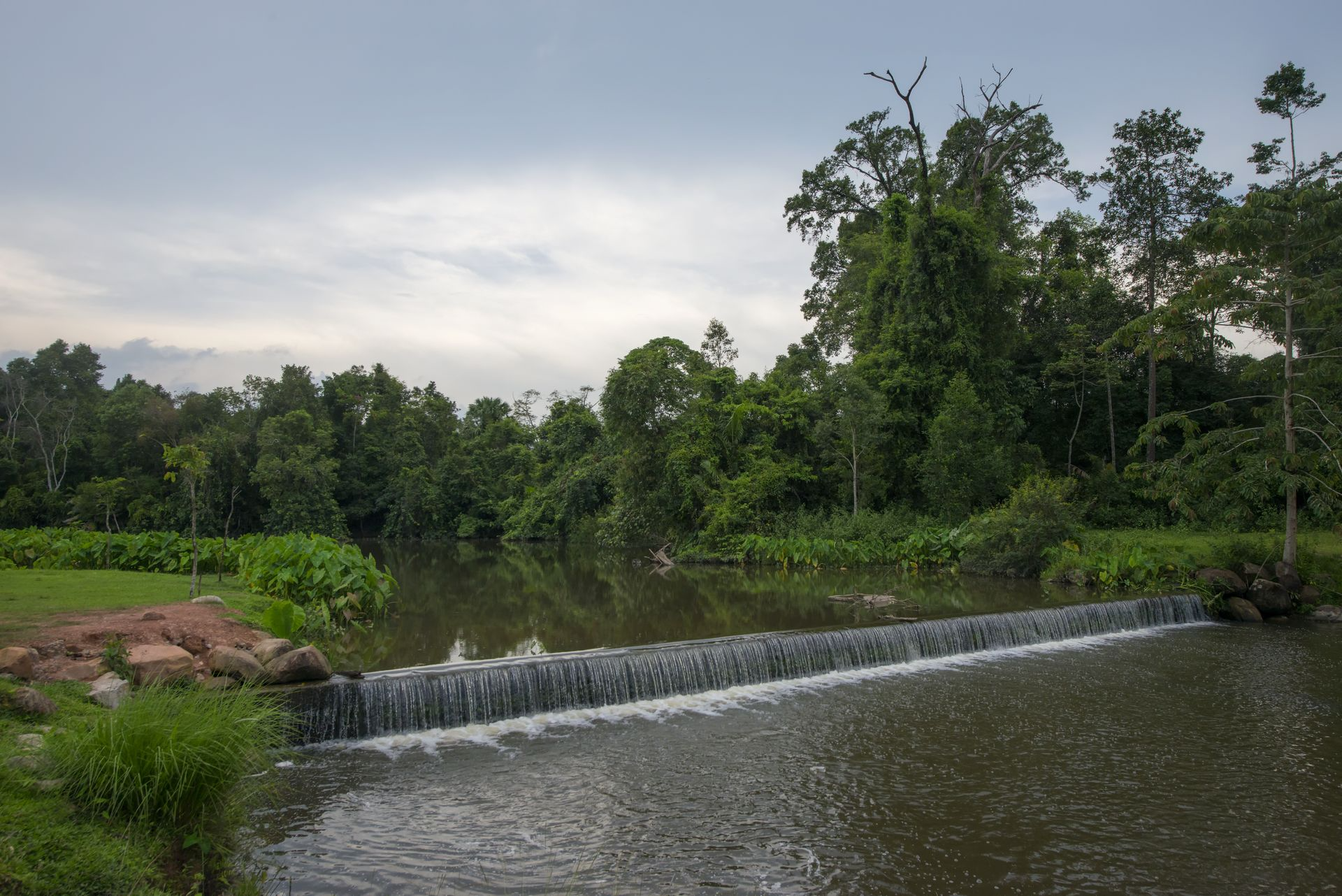
Installing check dams in drainage channels dissipates runoff energy, preventing erosion and sedimentation that can pollute local water systems.
Uncontrolled stormwater runoff is a primary driver of soil loss and water quality degradation on construction and industrial sites. As runoff velocity increases, its erosive power grows exponentially, leading to channel incision and the transport of pollutants into local watersheds.
Check dams serve as a critical structural intervention to mitigate these risks by physically intercepting flow and reducing hydraulic energy.
Research indicates that properly implemented check dams can reduce peak flow velocities by up to 50%, significantly increasing sediment trapping efficiency and ensuring compliance with Clean Water Act regulations.
By transforming high-velocity flow into a series of controlled pools, these structures stabilize drainage paths and prevent costly site damage.
What Is a Check Dam?
A check dam is a small, temporary or permanent barrier constructed across a swale, ditch, or channel to slow the flow of stormwater. By reducing water velocity, check dams encourage sediment to settle out of the runoff, minimizing downstream erosion.
Check dams serve five primary technical roles in site stabilization and water management:
- Velocity Control: Physically impeding flow to prevent erosive “scour” in drainage channels.
- Sediment Capture: Creating upstream pooling areas where suspended solids can settle out of the water column.
- Channel Stabilization: Providing structural reinforcement to swales and ditches during high-flow events.
- Water Quality Improvement: Filtering pollutants and limiting downstream sediment transport.
- Hydrograph Management: Enhancing soil infiltration and lowering peak discharge rates to protect downstream infrastructure.
How Do Check Dams Control Runoff Velocity?
Check dams effectively manage stormwater by physically altering its hydraulic behavior within a drainage path.
In an unobstructed drainage path, gravity accelerates water, increasing its kinetic energy and potential for soil detachment (scouring). Check dams mitigate this process through the following scientific mechanisms:
- Reduction of the Hydraulic Gradient: By creating a series of vertical drops, check dams effectively replace a single, steep longitudinal slope with a sequence of much flatter reaches. This reduces the stress exerted by the water on the channel bed, keeping it below the critical threshold required for soil erosion.
- Transformation of Flow Regimes: Check dams force a transition from supercritical flow (high-velocity, turbulent) to subcritical flow (low-velocity, tranquil) within the pool area. As water approaches the dam, it forms a backwater curve, which significantly increases the cross-sectional area of the flow, thereby decreasing its velocity in accordance with the Continuity Equation.
- Energy Dissipation via Hydraulic Jumps: When water flows over the check dam weir and into the downstream pool, it often forms a hydraulic jump. This phenomenon is a highly efficient method of energy dissipation, in which kinetic energy is converted into heat and turbulence within a controlled splash pool rather than being expended on eroding the channel banks.
- Particle Settling and Stokes’ Law: By reducing velocity, check dams create conditions in which upward turbulence is less than the settling velocity of suspended particles. This allows sedimentation, as described by Stokes’ Law, in which heavier particles settle out of suspension as the flow reaches a state of relative quiescence behind the barrier.
According to the Natural Resources Conservation Service (NRCS), an optimized check dam system maintains flow velocity at a level that minimizes erosion while safely and efficiently conveying stormwater away from sensitive site areas.
Types of Check Dams and Their Applications
To ensure long-term structural integrity and optimal sediment retention, construction materials must be selected based on the site’s specific hydraulic demands. The choice of material is governed by the expected hydraulic load, the duration of the installation, and the sensitivity of the downstream environment.
| Material | Application Type | Best Use Case |
|---|---|---|
| Rock (Riprap) | Permanent / Long-term | High-flow channels require durable energy dissipation. |
| Gravel or Sandbags | Temporary | Rapid deployment for short-term construction phases. |
| Wattles (Fiber Rolls) | Temporary | Low-flow swales and environmentally sensitive perimeters. |
| Logs or Timber | Semi-Permanent | Naturalized settings or remote sites with available timber. |
| Gabions | Permanent | Steep grades requiring wire-mesh reinforced rock structures. |
1. Rock (Riprap) Check Dams: For High-Flow Durability
Rock check dams are the industry standard for moderate to high-flow channels. Constructed from layered riprap, these are ideal for long-term stabilization. While they offer superior resistance to washout, engineers must ensure proper sizing and the use of filter fabric to prevent soil undermining at the base.
2. Gabion Check Dams: The Permanent Heavy-Duty Solution
For permanent installations with extreme structural demands, gabion check dams provide maximum stability. These wire-mesh baskets filled with stone are highly durable but come with higher upfront engineering and installation costs. They are best suited for steep gradients where standard rock dams might shift.
3. Fiber Roll (Wattle) Check Dams: Eco-Friendly Low Flow
Commonly used in environmentally sensitive areas or small drainage swales, fiber rolls (wattles) are lightweight and often biodegradable. They are an excellent choice for perimeter control, though they should be restricted to low-flow conditions to prevent overtopping or displacement.
4. Sandbag & Gravel Bag Check Dams: Rapid Temporary Control
Designed for temporary construction sites, sandbags or gravel bags offer a highly adaptable solution that is easy to install and decommission. Because they are prone to tearing and UV degradation, they require more frequent maintenance inspections than rigid structures.
5. Log or Timber Check Dams: Naturalized Landscape Integration
Log dams are frequently utilized in restoration projects and naturalized landscapes where aesthetic integration is a priority. While they blend seamlessly with the environment, their lifespan is limited by natural decay, making them less suitable for high-consequence infrastructure compared to rock or gabions.
How to Install a Check Dam: Step-by-Step
Proper installation is critical to ensure a check dam reduces velocity without causing bank erosion or structure failure. Follow these steps for professional-grade results.
Step 1: Site Assessment
A thorough evaluation of site conditions ensures effective design and placement. Key factors to evaluate include:
- Channel slope and length
- Soil type and erodibility
- Expected runoff volume and velocity
- Drainage area size
- Environmental sensitivities
This will allow site managers to select the best materials and location for the check dam to maximize its effectiveness.
Step 2: Determine Proper Spacing
Correct spacing is essential to maximize effectiveness. The FHWA recommends placing check dams so that the crest of the downstream dam is at the same elevation as the toe of the upstream dam. This configuration creates a continuous step-pool system that stabilizes the channel.
Step 3: Select Appropriate Materials
Select materials based on the duration of the project. Use riprap or gabions for permanent, long-term stabilization. For temporary construction needs, sandbags, gravel bags, or fiber wattles offer a more flexible, easily removable solution.
Step 4: Prepare the Channel
Begin by clearing all debris, large stones, and dense vegetation to ensure the check dam makes direct contact with the soil.
Excavate a shallow anchor trench, typically six inches deep, across the entire width of the channel. This trench serves as a structural foundation that prevents the dam from sliding downstream during high-velocity events.
If you are using rock or riprap, line this trench with geotextile filter fabric. The fabric acts as a critical barrier, allowing water to pass through while preventing fine soil particles from migrating, which keeps the heavy structure from sinking into the channel bed over time.
Step 5: Construct the Check Dam
When stacking your materials, build the dam so that the center is significantly lower than the outer edges, creating a parabolic or V-shaped weir. This specific geometry is vital because it funnels overflow toward the center of the channel, away from the vulnerable side slopes.
Ensure the edges of the dam are keyed, or extended, at least 1.5 to 2 feet into the channel banks.
Keying the structure into the soil prevents bypass flow, where water erodes a path around the sides of the dam and eventually causes the entire system to fail.
Step 6: Stabilize the Downstream Area
To prevent scour and localized erosion, you must armor the area immediately behind the dam where overtopping water will land.
By placing additional rock, riprap, or heavy-duty erosion control mats at the base, you create a dedicated splash pad. This pad absorbs and dissipates the kinetic energy of falling water, protecting the channel bed from scouring and preventing undermining of the dam’s foundation.
Proper stabilization here ensures that the energy redirected by the check dam doesn’t simply create a new erosion problem further downstream.
Maintenance and Inspection Requirements
Regular maintenance is the cornerstone of regulatory compliance and long-term erosion control. Without consistent oversight, check dams can become overwhelmed, leading to failure of nearby BMPs and fines.
To meet EPA standards and ensure structural integrity, inspections should occur:
- Weekly: During all phases of active construction.
- Post-Rainfall: Within 24 hours of any precipitation event reaching 0.5 inches or greater.
- Emergency Assessments: Immediately following major storm events to identify structural displacement or critical sediment buildup.
Core maintenance requirements often include:
- Sediment Removal: Clean out accumulated silt and debris once it reaches one-half the height of the dam. This restores the structure’s hydraulic capacity and prevents sediment from overtopping the weir.
- Structural Repairs: Inspect for and repair displaced rocks, torn sandbags, or degraded wattles. Replacing these components early prevents a localized breach from becoming a total failure.
- Bank Stabilization: Check for the formation of bypass channels along the banks. If water is cutting around the edges, the dam must be re-keyed into the soil and the banks reinforced.
- Scour Prevention: Verify that the downstream splash pad remains intact, and continue adding armor if channel-bed gouging is observed.
When to Use Check Dams
Check dams are versatile tools, but they must be applied to the correct environmental contexts to be effective.
Check dams are particularly effective in the following scenarios:
- Temporary drainage swales on construction sites
- Roadside ditches and utility corridors
- Channels with moderate slopes
- Areas requiring sediment control before permanent stabilization
- Sites subject to NPDES stormwater permitting
They should not be used in perennial streams or large drainage channels without proper engineering and regulatory approval.
Check dams are a proven and cost-effective solution for controlling runoff velocity, reducing erosion, and improving water quality on construction and industrial sites. Supported by guidance from the EPA, FHWA, and NRCS, these structures play a vital role in stormwater management and regulatory compliance.
When properly designed, installed, and maintained, check dams create a stable step-pool system that protects both the site and downstream environments. Integrating them into a broader erosion and sediment control strategy ensures long-term effectiveness and environmental stewardship.
FAQs
What Is the primary purpose of a check dam?
The primary objective is to manage hydraulic energy by slowing runoff velocity. By creating small pools that dissipate energy, check dams facilitate sediment settling and safeguard the integrity of the channel bed against erosive forces.
How far apart should check dams be installed?
Spacing is determined by the slope of the channel. For optimal performance, dams should be placed so that the base of the upstream structure is level with the top of the downstream one, ensuring a consistent and controlled flow throughout the drainage path.
Are check dams permanent or temporary?
They are versatile solutions adapted to project needs. Temporary dams (using wattles or gravel bags) are ideal for stabilizing active construction sites, while permanent installations (utilizing riprap or gabions) provide long-term erosion control for finished landscapes.
Can check dams be used in natural streams?
While effective, their use in natural or perennial waterways is subject to significant regulatory oversight. These applications typically require professional engineering and environmental permits to ensure the structures do not negatively impact local aquatic habitats or downstream flow.
How often should check dams be maintained?
Effective performance relies on proactive management. Systems should be inspected weekly and following any major storm event to assess structural integrity and determine if sediment removal or repairs are necessary to restore full capacity.
What happens if sediment is not removed?
Failure to clear accumulated sediment leads to “filling,” which causes water to overtop or bypass the dam entirely. This not only renders the structure ineffective but can actually accelerate erosion in the surrounding area.