
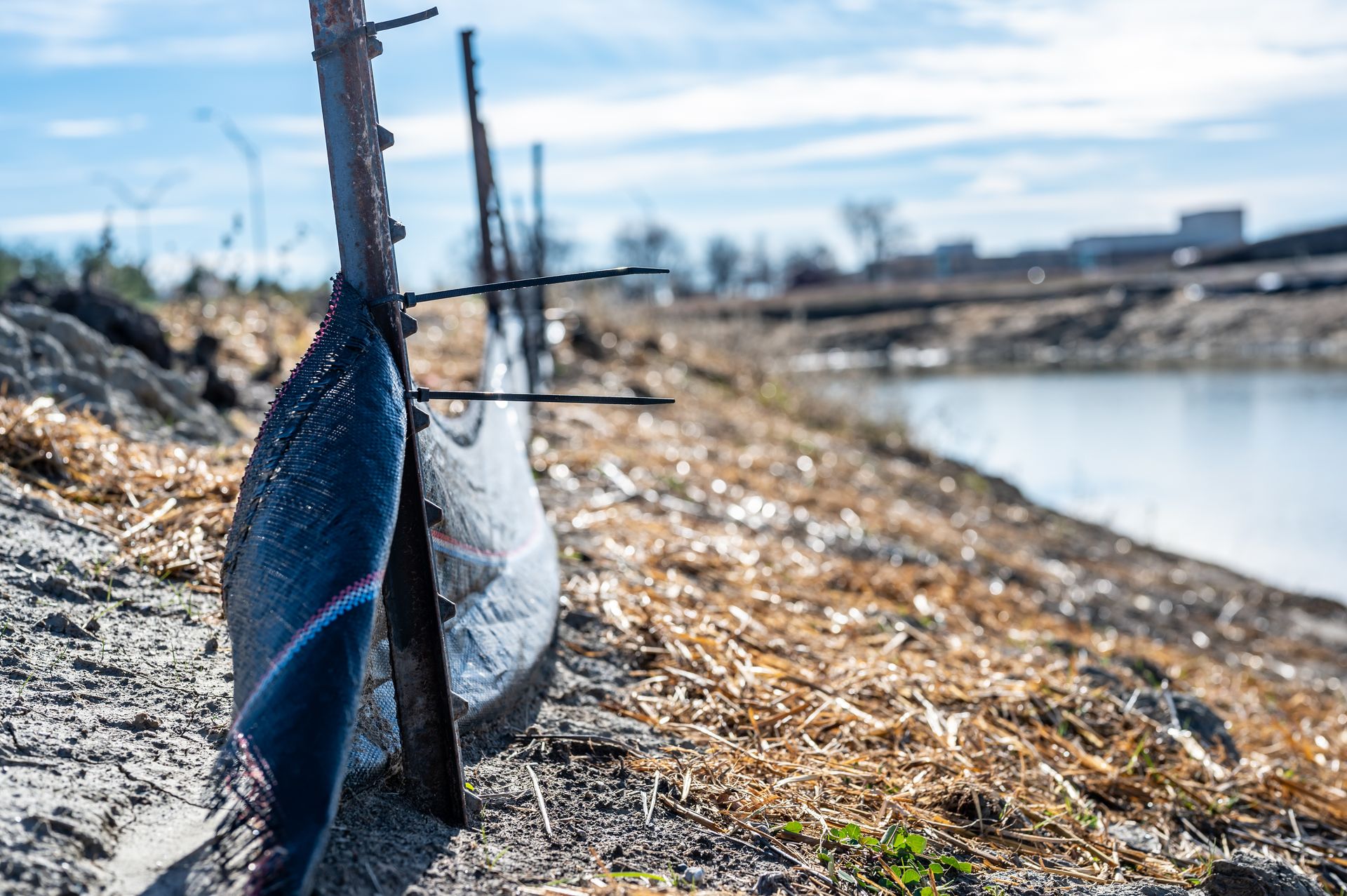
A silt fence is a temporary sediment control barrier made of porous geotextile fabric anchored by wooden or metal posts.
Installed around perimeters and vulnerable slopes, it captures heavy soil particles while allowing stormwater to pass through, preventing erosion and protecting local waterways from runoff.
Silt fences are one of the most common SWPPP best management practices (BMPs) found on active construction zones due to their cost-effectiveness and ubiquity of professional installers.
A single 100-foot run of fencing can hold up to 50 tons of trapped sediment, making it one of the most practical tools for job site stabilization. Depending on flow rates and project timelines, options range from standard fabric designs to heavy-duty wire-backed and high-visibility variations.
In this guide, you’ll learn how silt fences work, explore top alternatives like straw wattles and check dams, and share essential installation and maintenance practices to keep your site fully compliant.
How Do Silt Fences Work?
Silt fences function as temporary sediment control barriers by holding back stormwater and allowing suspended soil particles to settle out of suspension before the runoff leaves a site.
Rather than acting as a total dam, the porous geotextile fabric slows the flow of water, creating a temporary ponding area on the uphill side.
As water accumulates behind the barrier, heavy sediment particles sink to the ground while the clarified water slowly filters through the geotextile material.
This process prevents soil off-site migration, protects nearby storm drains and waterways from siltation, and maintains site compliance with environmental regulations.
By containing loose soil on-site, silt fences prevent severe ground erosion, protect nearby waterways from sediment pollution, and help contractors maintain compliance with EPA stormwater management regulations and SWPPP requirements.
Why Silt Fences Are Important to Construction
Silt fences are critical temporary sediment control barriers that protect surrounding ecosystems, maintain site stability, and ensure legal compliance during active land-disturbing projects.
- Effective Sediment & Erosion Control: They slow down stormwater runoff, allowing suspended soil particles to settle on-site rather than washing away and causing severe soil loss.
- Water Quality & Environmental Protection: By reducing runoff turbidity, silt fences prevent sediment pollution in local streams, wetlands, and storm drains, safeguarding aquatic wildlife and community drinking water supplies.
- Regulatory Compliance: Installing silt fences is a mandatory Best Management Practice (BMP) for fulfilling EPA stormwater regulations, securing site permits, and meeting Stormwater Pollution Prevention Plan (SWPPP) requirements.
- Site Stabilization: Containing loose soil on-site preserves ground integrity, prevents mud tracking onto nearby roads, and simplifies overall site restoration efforts.
Types of Silt Fences
When selecting a silt fence for any residential or commercial project, it’s essential to understand the differences between their various types.
- Conventional Silt Fences: The traditional type consists of geotextile fabric supported by wooden or metal stakes. These are effective for medium-term projects.
- Wire-Backed Silt Fences: Wire-backed fences are enhanced with wire mesh backing for added stability and durability. Wire-backed silt fences are suitable for longer-term projects and areas with higher water flow.
- High-Visibility Silt Fences: Equipped with bright colors for increased visibility, this type is often used in areas where aesthetics and public perception are important.
- Permeable Silt Fences: Designed with materials that allow water to pass through more freely while still capturing sediment, permeable silt fences are designed for areas with high water flow.
Where Are Silt Fences Installed?
Silt fences are installed along perimeter boundaries, downhill slopes, and sensitive ecological zones where stormwater runoff and soil erosion are most likely to occur.
Projects typically position them at the downhill edges of a construction site to prevent sediment-laden water from escaping onto adjacent properties, public roads, or surrounding land.
They are also placed along the base or contours of steep slopes to slow down water velocity and catch loose soil before it accelerates downhill.
Additionally, silt fences serve as protective buffers around storm drain inlets, temporary soil stockpiles, and sensitive water bodies to keep migrating sediment from polluting aquatic ecosystems and clogging municipal drainage systems.
How Reliable Are Silt Fences?
Silt fences are considered highly reliable and effective. According to some estimates, 100 feet of silt fencing can hold up to 50 tons of sediment.
However, the reliability of silt fences depends on several factors, such as installation, maintenance, sizing, and complementary measures.
It’s often the case that silt fences become overwhelmed because they are not properly cleaned after rainstorms or heavy weather conditions. Therefore, regular cleaning is absolutely essential to proper silt fence operation.
Alternatives to Silt Fences
While silt fences are a standard sediment control solution, project managers often select alternative or complementary erosion control measures depending on site slope, soil stability, and expected stormwater volume:
- Straw Wattles: Tubular structures filled with straw or other natural materials. They slow water flow, capturing sediment and preventing erosion.
- Sediment Basins: Depressions designed to capture and settle sediment-laden water. They are effective for larger construction sites with significant runoff.
- Check Dams: Temporary barriers constructed across water channels to slow down water flow, reducing erosion and capturing sediment.
- Hydroseeding: Spraying a mixture of seeds, mulch, and other materials to establish vegetation quickly, stabilizing soil and preventing erosion.
Plus, these measures can be used with silt fences to maximize the efficiency of your stormwater BMPs.
Do I Need Professional Silt Fence Installation?
For optimal performance and reliable regulatory compliance, professional installation is strongly recommended.
Experienced erosion control specialists can conduct a thorough site assessment to determine proper fence placement, assist in developing a SWPPP, and ensure correct trenching and anchoring techniques.
Professional services also include ongoing inspection and maintenance to ensure silt fences and other erosion control measures remain effective throughout the duration of a project.
FAQs
Can silt fences be reused on multiple construction projects?
While silt fence fabric and posts can technically be reused, their filtering effectiveness diminishes over time due to UV exposure, fabric wear, and trapped sediment. Reusing materials is only recommended if the fabric remains completely intact, tear-free, and unclogged after a thorough quality assessment.
Are silt fences suitable for all construction sites?
Silt fences work exceptionally well for controlling sheet flow on mild-to-moderate slopes, but they are not suitable for concentrated water channels, streams, or high-velocity runoff areas. Sites with heavy, continuous water flow require stronger BMPs like check dams or sediment basins.
Can silt fences prevent all soil erosion?
No. Silt fences are primarily sediment control barriers designed to trap soil that has already eroded, rather than preventing erosion at the source. For complete protection, they must be combined with proactive erosion control measures like hydroseeding, slope matting, or mulching.
How often should silt fences be inspected and maintained?
Silt fences should be inspected weekly and within 24 hours of any rainfall event that produces significant runoff. Maintenance, such as removing accumulated sediment once it reaches one-third to one-half the height of the fence, is required to prevent structural failure.
How long does a silt fence typically last on a job site?
A properly installed silt fence generally lasts between six months to a year, depending on weather conditions, UV exposure, and site traffic. Regular maintenance and prompt repairs can extend its functional lifespan throughout a project.
What is the difference between erosion control and sediment control?
Erosion control prevents soil particles from detaching in the first place (e.g., ground covers, hydroseeding, mulch), whereas sediment control captures detached soil particles before they leave the site (e.g., silt fences, inlet protection, sediment traps). Effective site management relies on a combination of both.
Schedule My SWPPP Consultation Today