
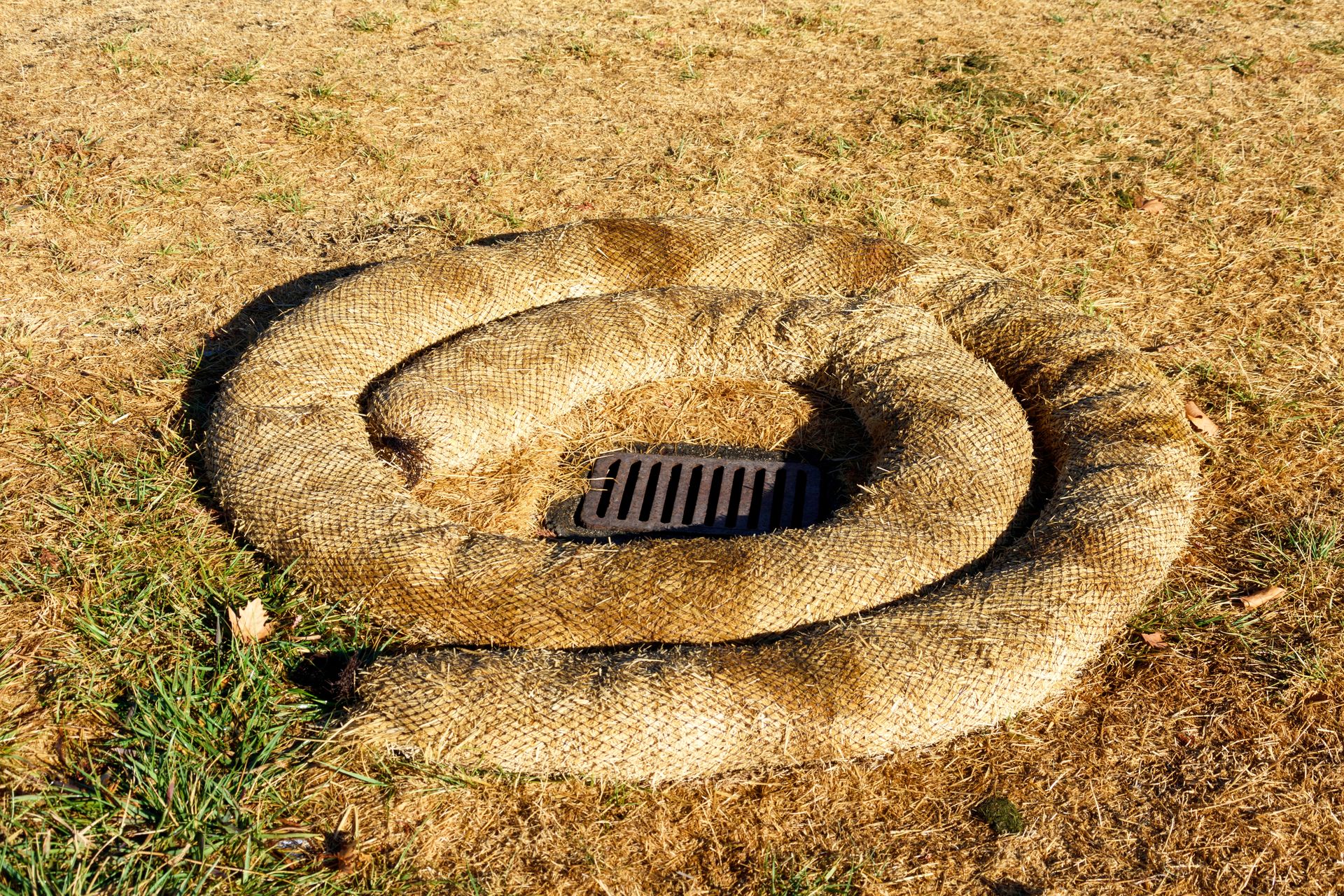
Straw wattles prevent soil erosion and manage runoff by slowing down water flow, trapping sediment, and promoting water infiltration into the surrounding soil.
Wattles are made from compressed straw fibers, such as wheat or rice straw, encased in biodegradable mesh netting that acts as check dams when staked along slopes or storm drains.
By reducing surface-water runoff velocity, straw wattles let suspended soil particles settle behind the barrier instead of washing away.
Straw wattles are 100% biodegradable and can be installed anywhere in an active work zone without heavy machinery, making them an eco-friendly alternative to other best management practices (BMPs).
In this guide, you’ll learn everything you need to know about implementing straw wattles for erosion control, including their benefits, proper installation techniques, key applications, and routine maintenance tips.
How Do Straw Wattles Work?
Straw wattles go by several names, fiber rolls, straw worms, and bio-rolls, and are typically placed on slopes without proper vegetative cover or those that have lost over a quarter of their protective cover.
These thick tubes are made of fine mesh fibers, such as shaved wood, wheat, and rice grain, rolled into a tube with wire or twine.
Wattles serve many functions on active worksites for erosion control, including:
- Slowing Runoff Velocity: Installed perpendicular to slope gradients, they break up continuous slopes to interrupt and slow down sheet flow.
- Trapping Sediment: As water pools behind the roll, heavy sediment particles settle out rather than washing downhill.
- Increasing Infiltration: By briefly detaining water, they give runoff time to soak into the ground, reducing overall surface erosion.
While primarily designed as temporary BMPs until vegetation is re-established, proper installation and routine maintenance allow straw wattles to provide effective, long-term slope stabilization.
Benefits of Straw Wattles for Worksites
Straw wattles offer several erosion-control benefits for site owners, including cost-effectiveness and easy cleanup.
| Benefit | Key Description | Impact on Worksites |
|---|---|---|
| Erosion Control | Impedes, absorbs, and slows water runoff on slopes; protects native topsoil from extreme wind conditions. | Accelerates soil revitalization after construction and protects against site risks like flooding. |
| Sediment Control | Filters out heavy sediment particles before water enters storm drains, vents, or discharge points. | Protects topsoil and minimizes off-site sedimentation around slopes and discharge areas. |
| Increased Infiltration | Absorbs excess water and safeguards existing native vegetation. | Prevents water pooling and restores the soil’s natural capacity to absorb rainfall. |
| Cost-Effective | Requires lower material/labor costs, no heavy machinery, and features simple installation. | Delivers significant savings over temporary basins or silt fences throughout project lifecycles. |
| Eco-Friendly | Constructed from organic and fully biodegradable materials. | Provides a more sustainable alternative compared to conventional stormwater BMPs. |
Erosion Control
Straw wattles can impede, absorb, and slow excess runoff on slopes and protect native topsoil from extreme winds. In turn, this can speed soil revitalization after construction ends and protect against other potential hazards, such as flooding.
Sediment Control
Straw wattles protect native topsoil, reduce sedimentation risk, and filter out heavy sediment particles before they enter storm drains or vents. For this reason, straw wattles are also a popular control placed around discharge points, not just slopes.
Increased Infiltration
Erosion and excessive rainfall can reduce the soil’s ability to absorb water, leading to pooling and, you guessed it, erosion. Straw wattles help the soil by absorbing excess water and protecting native vegetation, which helps increase infiltration.
Schedule My Expert SWPPP Consultation Today
Cost Effective
Compared with the material and labor costs of building a temporary basin or installing a silt fence, straw wattles offer a much more cost-effective alternative. They don’t require heavy machinery and a layperson can install them fairly easily. While wattles may need replacement over their many months of service, they still cost far less than most stormwater BMPs by the end of a project.
Eco-Friendly
Straw wattles offer a highly sustainable erosion control solution because theyare made from 100% natural, biodegradable fibers.
Unlike synthetic alternatives, organic wattles break down naturally over time, enrich the surrounding soil, and eliminate the need for removal or disposal after project completion.
This eco-friendly lifecycle makes straw wattles one of the most environmentally responsible best management practices (BMPs) for stormwater and slope stabilization.
5 Applications for Straw Wattles on Construction Sites
Straw wattles are a versatile erosion control measure that stabilizes soil, filters sediment, and prevents runoff pollution across vulnerable job-site areas. Common applications include:
- Slope Protection: Installed along bare or freshly graded slopes to reduce water velocity, prevent gully formation, and stabilize topsoil.
- Perimeter Control: Placed along site borders to filter runoff and keep disturbed sediment contained within the property boundaries.
- Storm Drain Inlet Protection: Positioned around curb inlets and catch basins to trap debris and sediment before stormwater enters municipal systems.
- Stockpile Containment: Encircled around temporary soil, sand, or rock piles to prevent materials from washing away during rainfall.
- Streambank & Shoreline Stabilization: Used near natural water bodies and stream banks to dissipate wave action, control runoff, and protect sensitive aquatic habitats.
4 Tips for Implementing and Maintaining Straw Wattles
Like all stormwater BMPs, straw wattles work best when installed and applied properly. Here are some tips to ensure your straw wattles work best for your SWPPP.
1. Perform a Site Evaluation
First, inspect your worksite to identify areas most vulnerable to erosion or pollutant contact. Where you place wattles as the primary or secondary erosion-control measure will determine how well they slow, divert, and filter stormwater runoff, and how long they will last before they need replacement.
2. Install Wattles Properly
Install wattles in a trench at least 6 inches deep and wide enough to hold them. Once the wattle is in the trench, fill the remaining soil around it to secure it in place.
Always ensure the rope or twine faces upward so the wattle doesn’t come undone and so you can remove it later.
3. Perform Routine Inspection
Evaluating the condition of your stormwater BMPs should be a regular part of any SWPPP, but wattles require extra care. Because they’re made of organic materials, wattles can deteriorate quickly and require replacement.
Also, be on the lookout for issues such as:
- Plastic or trash buildup
- Animals burrowing holes under wattles
- Water that creates gullies leading to erosion in different areas of the slope
4. Begin Re-Establishing Ground Cover
Start revitalizing surrounding soils by reseeding uphill for more ground cover. If you use a fast-acting solution, such as hydroseeding, you can remove your straw wattle fairly quickly as projects draw to a close.
Straw wattles effectively reduce erosion and filter out harmful pollutants before they reach storm drains or streambanks. That’s why they’re a favorite tool for leading environmental consulting companies.
FAQs
How are straw wattles installed?
To install straw wattles, we typically dig trenches along the contour of a slope or around the perimeter of an area needing erosion control. Then place the wattles in the trenches and stake them securely into the ground with wooden or metal stakes driven through the wattles at regular intervals, usually every 3 to 4 feet. Then compact the soil around the wattles to keep them in place.
What are straw wattles made of?
Straw wattles are made from straw fibers, usually from wheat or rice, encased in biodegradable netting, often jute, burlap, or other natural fibers. This netting allows the straw to maintain its shape and stay in place while gradually decomposing over time.
How long do straw wattles last?
The lifespan of straw wattles varies with environmental conditions, such as weather and moisture exposure. Typically, they last between 1 and 2 years before fully decomposing. Factors like heavy rainfall, UV exposure, and the type of vegetation growing around them can affect their durability.
Where should straw wattles be placed on a job site?
Install straw wattles along slope contours, around property perimeters, and across drainage flow paths to slow runoff. They also surround storm drain inlets, sit near the bases of temporary soil or rock stockpiles, and line stream banks or waterways to trap sediment before it leaves the site.
Do straw wattles need to be removed after project completion?
No, organic straw wattles made from 100% natural fibers and biodegradable netting do not need to be removed. Over time, they naturally break down and integrate into the surrounding soil while supporting newly established vegetation. However, if you used non-biodegradable synthetic mesh netting during installation, you must remove it once the site achieves permanent slope stabilization.