
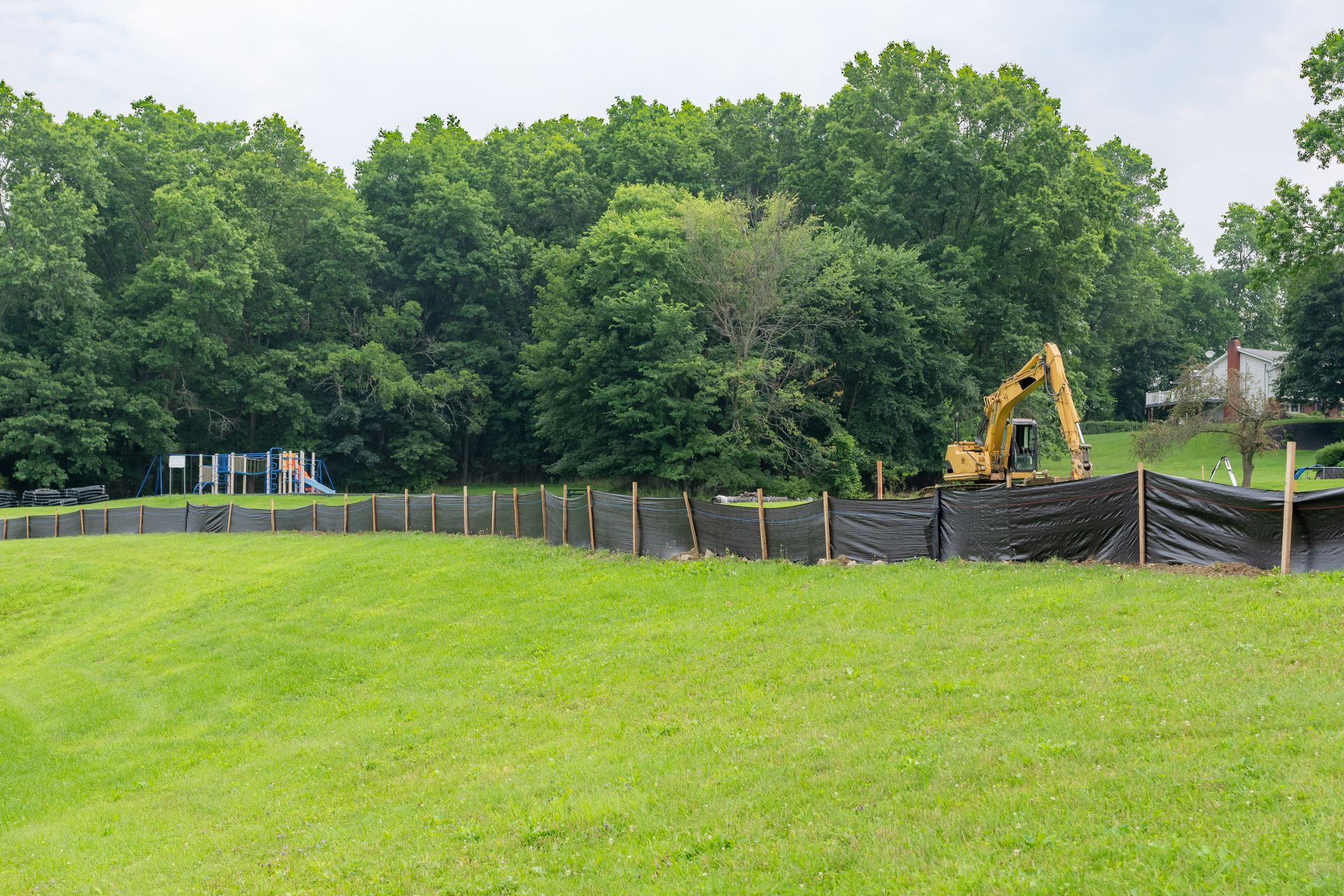
A silt fence is a temporary sediment barrier made of geotextile fabric attached to supporting posts. It is required on construction sites and near homes when soil-disturbing activities such as clearing, grading, or excavating expose loose soil to stormwater runoff.
The fence functions by ponding water, which slows down the flow and allows suspended soil particles to settle out before the runoff leaves the property.
Silt fences are among the most common erosion control BMPs found on active worksites and can help filter sediment and reduce erosion on downstream slopes.
Selecting the right type of geotextile material and ensuring proper trenching techniques during installation are vital to a fence working effectively.
This guide covers everything you need to know about silt fencing, including when it’s recommended on job sites, proper installation techniques, and how to choose between standard and heavy-duty options for your project, and when to hire a commercial silt fence installer.
What Is a Silt Fence? How Does It Work?
A silt fence is designed to prevent sediment runoff and soil erosion by acting as a barrier that slows stormwater and allows fine particles to settle.
Most silt fences are simple contraptions made up of wooden stakes and geotextile fabric sturdy enough to handle large volumes of water rushing downhill.
Rather than filtering water like a screen, a silt fence works through ponding and settlement. Here is how the process works:
- Slowing Runoff: The geotextile fabric acts as a physical barrier that slows down the velocity of rushing stormwater as it flows downhill.
- Creating a Temporary Pond: As the water slows, it pools behind the fence line.
- Settling Sediment: The calm, pooled water allows suspended soil particles and fine sediment to settle to the ground before the water slowly passes through the fabric or evaporates.
Silt fences are generally installed around the perimeter of a worksite to prevent sediment from escaping. They are also commonly employed on slopes to slow down water and divert it away from vulnerable topsoil.
When Is a Silt Fence Required on a Construction Site?
Silt fences are mandated by local, state, and federal environmental regulations as part of a site’s Stormwater Pollution Prevention Plan (SWPPP).
While exact rules vary by jurisdiction, a silt fence or equivalent sediment barrier is typically required under the following regulatory conditions:
- Soil Disturbance Thresholds: When land disturbance exceeds 1 acre or more under federal EPA guidelines, though many municipal laws enforce stricter limits starting at 10,000 square feet or any disturbance on a slope.
- Proximity to Sensitive Waterways: If a construction zone sits adjacent to sensitive environmental areas, wetlands, rivers, lakes, or active municipal stormwater drainage systems, barriers are legally required to prevent illicit sediment discharge.
- High-Risk Runoff Factors: Environmental protection agencies mandate installation if the site layout features steep slope gradients, highly erodible soil types, or if construction occurs during high-rainfall seasons.
Regulatory Requirements for Installing Silt Fences
To comply with federal, state, and local environmental protection mandates, a silt fence must meet specific civil engineering and regulatory design standards during a project:
- EPA Construction General Permit (CGP): Dictates that sediment controls must be placed along linear perimeters where stormwater leaves the disturbed area.
- Trenching Requirements: Most local building codes require the fabric to be trenched at least 6 inches deep into the ground to prevent water from undermining the fence.
- Maintenance Mandates: Regulations require regular inspections—typically every 7 days and within 24 hours of a major rain event—to clear accumulated sediment and repair tears.
When Is a Silt Fence Required Near a Home?
While large-scale commercial developments face strict federal mandates, residential properties frequently require silt fences during construction, remodeling, or major landscaping projects.
Local municipal building codes typically demand a sediment barrier whenever a home project involves clearing, grading, or erosion of the topsoil that exposes bare earth to the elements.
Property owners should proactively install a silt fence if their renovation disrupts topsoil on a sloped yard, as uncontained rainwater can quickly wash valuable soil down into local discharge points.
Homeowners should also consider setting up a barrier along their property line if ongoing neighboring construction activity, structural grading, or public roadwork sends muddy stormwater discharge toward their property.
Get My Free Silt Fence Installation Quote Now
3 Types of Silt Fences Explained
The effectiveness of a silt fence also depends on the type of silt fence you install. Silt fences come in various forms, each tailored to specific applications and site conditions. Common types of silt fences include:
- Conventional Silt Fence: Built using standard geotextile fabric stretched between wooden or lightweight metal stakes. This type is best suited for short-term erosion control on flat terrain with low-velocity stormwater runoff.
- Wire-Backed Silt Fence: Reinforced with a heavy-duty wire mesh or grid backing to drastically enhance structural stability and durability. This variation is ideal for medium-to-long-term projects facing higher water volumes and moderate slopes.
- Super Silt Fence: Combines industrial-grade chain-link fencing with a reinforced layer of geotextile fabric and steel posts. Engineered for maximum sediment retention and high-filtration capacity, it is required for steep slopes, high-velocity runoff areas, and long-term commercial construction sites.
Selecting the correct sediment barrier requires evaluating your specific construction landscape.
Environmental compliance officers and civil engineers typically choose a fence based on four critical variables: soil type, slope gradient, expected stormwater flow velocity, and the overall project duration.
How to Install a Silt Fence
The most common and regulatory-compliant method to install silt fencing is trenching. This process requires digging to specific depths and tight fabric tensioning, making specialized power tools or professional assistance often necessary.
To properly install a silt fence, professional installers typically follow these four steps:
- Excavating the Trench: Professionals use mechanical trenching equipment to carve a continuous, narrow channel along the downhill perimeter of the disturbed soil. To strictly meet local building codes, they ensure the trench is excavated to a precise minimum of 6 inches deep and 4 inches wide.
- Burying the Fabric: Installers drop the bottom section of the heavy-duty geotextile fabric completely into the trench. This professional anchoring technique is critical because it prevents high-velocity stormwater from undermining the barrier and washing sediment beneath the fence line.
- Driving the Stakes: The geotextile fabric is securely fastened to heavy-duty wooden or steel posts. Because these stakes must withstand immense structural water weight, professionals use specialized mechanical post-drivers to sink them deep into the earth.
- Backfilling and Compacting: Finally, crews backfill the trench with soil and mechanically compact it tightly around the buried fabric. This tight seal locks the entire barrier system into place and prevents structural blowouts during heavy rainfall.
Tips to Install and Maintain a Silt Fence
Material selection is just one aspect of proper silt fence installation. To ensure maximum effectiveness, you’ll need to decide where to install silt fencing and how much to install.
Some tips for proper silt fence utilization include:
- Installing fences downhill from disturbed areas to intercept sediment-laden runoff.
- Ensuring proper tensioning and alignment of the fence to minimize gaps and prevent bypass flow.
- Regularly inspecting and maintaining silt fences to address damage, clogging, or sediment accumulation.
- Monitoring sediment accumulation behind the fence and removing sediment as needed to maintain functionality.
- Adding complementary erosion control measures such as vegetative buffers, wattles, and check dams.
Determining how much silt fencing you need comes with different considerations. According to the EPA, 100 feet of silt fencing is required for every 10,000 square feet on a construction site.
Proper silt fence installation is a critical aspect of erosion control. Therefore, finding the right professional to assist you in planning and installing your silt fence is an important decision all site managers need to make before embarking on a project.
Ensure that silt fence installers have ample experience and environmental accreditation, including knowledge of NPDES and Construction General Permit regulations, to ensure sites meet proper SWPPP guidelines.
FAQs
Can I install a silt fence myself?
While DIY installation is possible, hiring a professional ensures proper installation, regulatory compliance, and optimal erosion control. If you use the trench method of installation, you’ll also require help from an excavation company.
How long does a silt fence last?
The lifespan of a silt fence varies depending on factors such as material quality, site conditions, and maintenance practices. Generally, silt fences are designed for temporary use during construction activities and may need periodic replacement.
Are there alternatives to silt fencing for erosion control?
Alternative erosion control measures include sediment barriers, vegetative buffers, erosion control blankets, and sediment basins. The effectiveness of each option depends on site-specific conditions and project requirements.
Do I need a permit to install a silt fence?
Typically, a standalone permit is not required just to install a silt fence; however, the fence itself is almost always a mandatory requirement to obtain a larger grading permit or building permit. Your local municipality will review your Stormwater Pollution Prevention Plan (SWPPP) to ensure sediment barriers are correctly cited before any groundbreaking can begin.
How much does it cost to install a silt fence?
The cost of installing a silt fence generally ranges from $2 to $6 per linear foot for standard materials and DIY setups. For large-scale commercial sites requiring heavy-duty wire-backed or super silt fences installed by a professional contractor, prices can scale from $8 to $15+ per linear foot depending on trenching difficulty and terrain.