
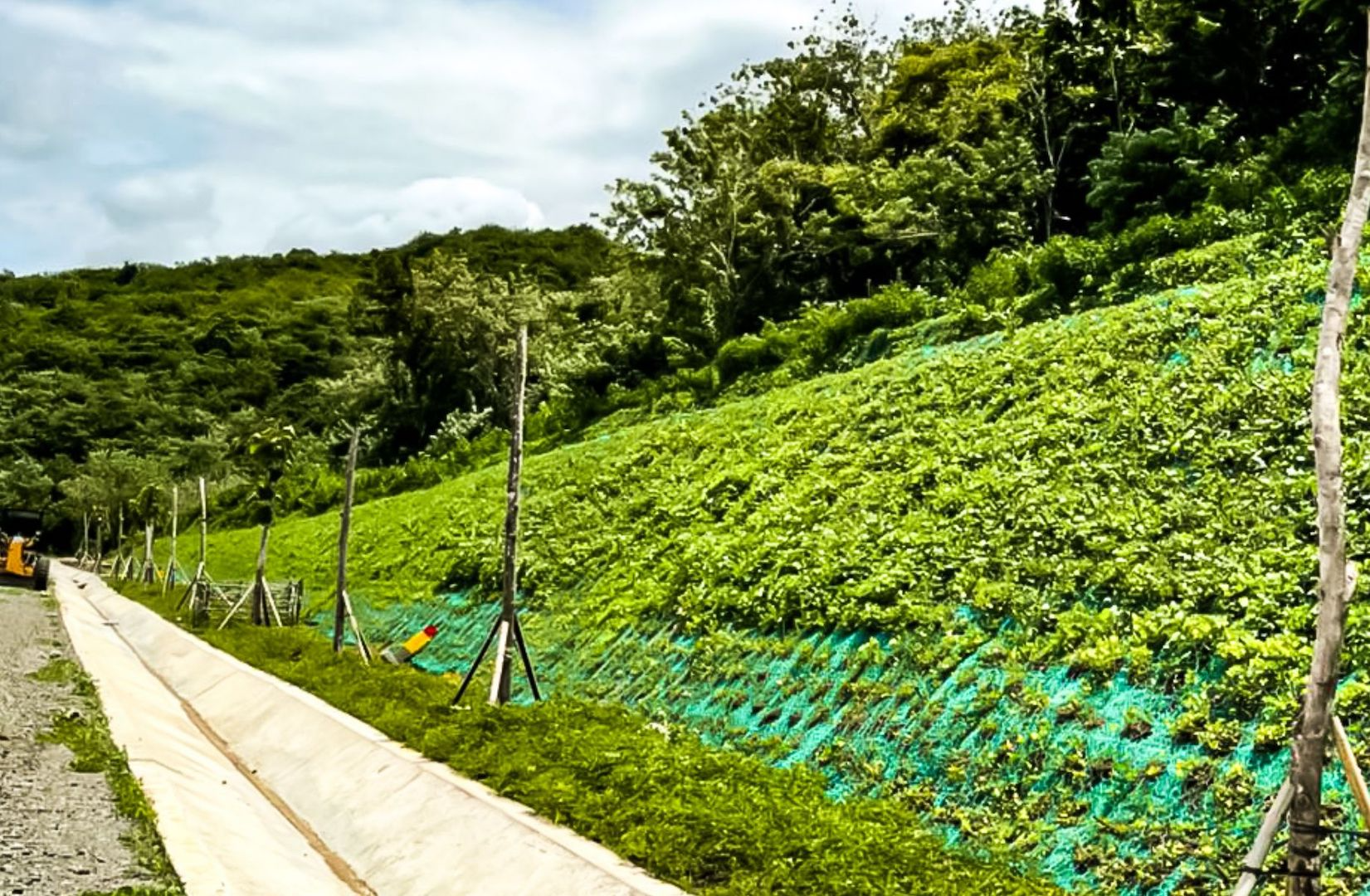
Unchecked soil erosion can lead to sedimentation, clog waterways, damage infrastructure, and trigger regulatory violations.
While engineered controls such as retaining walls, riprap, and drainage systems play an important role, vegetation planting is among the most effective and sustainable erosion control tools.
Plants are highly effective at combating erosion control, whether it’s establishing ground cover against the elements or strengthening the bond of the soil underneath.
Understanding how vegetation works in erosion control and which plants to use is important for both temporary erosion control and permanent site stabilization.
How Do Plants Help in Erosion Control
Vegetation controls erosion through several natural mechanisms that engineered systems alone cannot replicate.
Root Systems Stabilize Soil
A Harvard study found that greater plant stem diversity and leaf cover reduce surface runoff and sedimentation.
Plant roots bind soil particles together, increasing shear strength and resistance to movement. Deep-rooted vegetation anchors soil on slopes, embankments, and streambanks, reducing the risk of slippage or washout.
Studies show
Canopy Reduces Rain Impact
Leaves and stems intercept rainfall before it hits the ground. This reduces the force of raindrop impact, which is one of the primary causes of surface erosion and soil displacement.
Slows Surface Water Flow
Vegetation increases surface roughness, slowing runoff and allowing water to infiltrate the soil rather than rushing downhill. This reduces rill and gully formation and helps manage stormwater naturally.
Improves Soil Health
Vegetated soil retains organic matter and microbial activity, which improves structure, water absorption, and resilience over time. Healthier soil is far less prone to erosion than compacted or barren ground.
Vegetation vs. Structural Erosion Controls
Vegetation complements structural erosion controls by reducing runoff velocity and stabilizing soils so that additional sediment controls don’t need to be employed.
Structural solutions like retaining walls, riprap, culverts, and drainage basins manage water and soil movement mechanically. Vegetation enhances these systems by stabilizing the surrounding soil and reducing long-term maintenance needs.
The most effective erosion control strategies combine:
- Temporary controls during construction (silt fence, blankets, wattles)
- Permanent structural solutions where needed
- Long-term vegetative stabilization
This layered approach provides both immediate protection and lasting environmental stability.
Types of Vegetation Used for Erosion Control
Different site conditions require different plant solutions. Selecting the right vegetation is critical for success.
Grasses and Ground Cover
Grasses are commonly used for erosion control because they establish quickly and provide dense root networks near the surface.
Ground cover, such as mulch, grass, and sod, stabilizes disturbed soils on construction sites, vulnerable slopes, and utility corridors.
Hydroseeding is often used to apply grass seed, mulch, and fertilizer evenly across large areas.
Shrubs and Bushes
Shrubs provide stronger soil reinforcement than grasses because their root systems extend deeper and spread wider.
They are especially effective on steeper slopes, along drainage channels, and in transitional areas between buildings and open land where erosion pressure is higher. Because shrubs establish relatively quickly and persist long term, they are a reliable solution for areas that need durable, low-maintenance stabilization.
Trees
Trees deliver the most powerful long-term erosion control through deep, anchoring root systems that stabilize soil over large areas.
They are best suited for streambanks, riparian buffers, large slopes, and perimeter zones where permanent erosion resistance is needed.
While trees take longer to establish, proper species selection and thoughtful placement are critical to avoid conflicts with foundations, utilities, and underground infrastructure while maximizing erosion control benefits.
Native Plants
Native vegetation is often the most effective option because it is adapted to local soil, climate, and rainfall patterns.
The benefits of maintaining native plants are numerous:
- Higher survival rates
- Improved ecological balance
- Better compliance with environmental regulations
- Lower maintenance
Many municipalities encourage or require native plantings for erosion control and stormwater management.
Regulatory and Environmental Benefits
Vegetative erosion control supports compliance with a wide range of environmental regulations.
Most erosion control standards emphasize stabilization of disturbed areas as quickly as possible. Vegetation is often required to meet permit conditions related to:
- SWPPP compliance
- NPDES permits
- Local stormwater ordinances
- Environmental impact mitigation
In addition, vegetation helps protect nearby waterways, wetlands, and ecosystems by reducing sediment transport and pollutant loading.
Best Practices for Using Vegetation in Erosion Control
To maximize effectiveness, vegetation should be integrated into erosion control planning from the start.
Best practices of using plants to combat soil erosion include:
- Conducting soil testing and site analysis
- Selecting plants appropriate for slope, soil, and moisture conditions
- Combining vegetation with structural controls where necessary
- Installing temporary protections during establishment
- Monitoring and maintaining plantings over time
Vegetation plays a critical role in erosion control by stabilizing soil, managing water, and protecting the environment. When properly designed and implemented, vegetative systems work in harmony with engineered controls to create resilient, compliant, and sustainable sites.
FAQs
How does vegetation prevent soil erosion?
Vegetation prevents erosion by anchoring soil with root systems, reducing the impact of rainfall on the ground surface, slowing water runoff, and improving soil structure. Together, these effects significantly reduce soil displacement caused by water and wind.
Is vegetation alone enough to control erosion on construction sites?
In most cases, vegetation should be combined with temporary or structural erosion control measures. While vegetation provides long-term stabilization, engineered controls such as silt fencing, erosion blankets, or drainage systems are often needed until plants are fully established.
What types of vegetation work best for erosion control?
Grasses are ideal for quick stabilization, shrubs provide deeper soil reinforcement, and trees offer long-term slope and streambank stability. Native plants are often the best choice because they are adapted to local climate and soil conditions and require less maintenance.
How long does it take for vegetation to control erosion effectively?
Initial erosion protection can begin within weeks for grasses, but full stabilization typically takes several months as root systems develop. Trees and shrubs may take one to three growing seasons to provide maximum erosion control benefits.
Can vegetation help meet stormwater and environmental regulations?
Yes. Vegetative erosion control is commonly required for compliance with SWPPP, NPDES permits, and local stormwater regulations. Properly installed vegetation reduces sediment runoff, improves water quality, and supports regulatory approval.
What is hydroseeding, and when is it used?
Hydroseeding is a method of applying seed, mulch, fertilizer, and water in a slurry sprayed over soil. It is commonly used on large areas, slopes, and construction sites to establish vegetation quickly and evenly for erosion control.
What happens if vegetation fails to establish on a site?
If vegetation does not establish properly, exposed soil remains vulnerable to erosion, which can lead to sediment runoff, failed inspections, and potential fines. In these cases, reseeding, soil amendments, or additional erosion control measures may be required.
Are native plants better for erosion control than non-native species?
Native plants are often more effective because they are adapted to local rainfall patterns, soil conditions, and climate. They typically establish more reliably, require less maintenance, and provide better long-term erosion control and environmental benefits.