
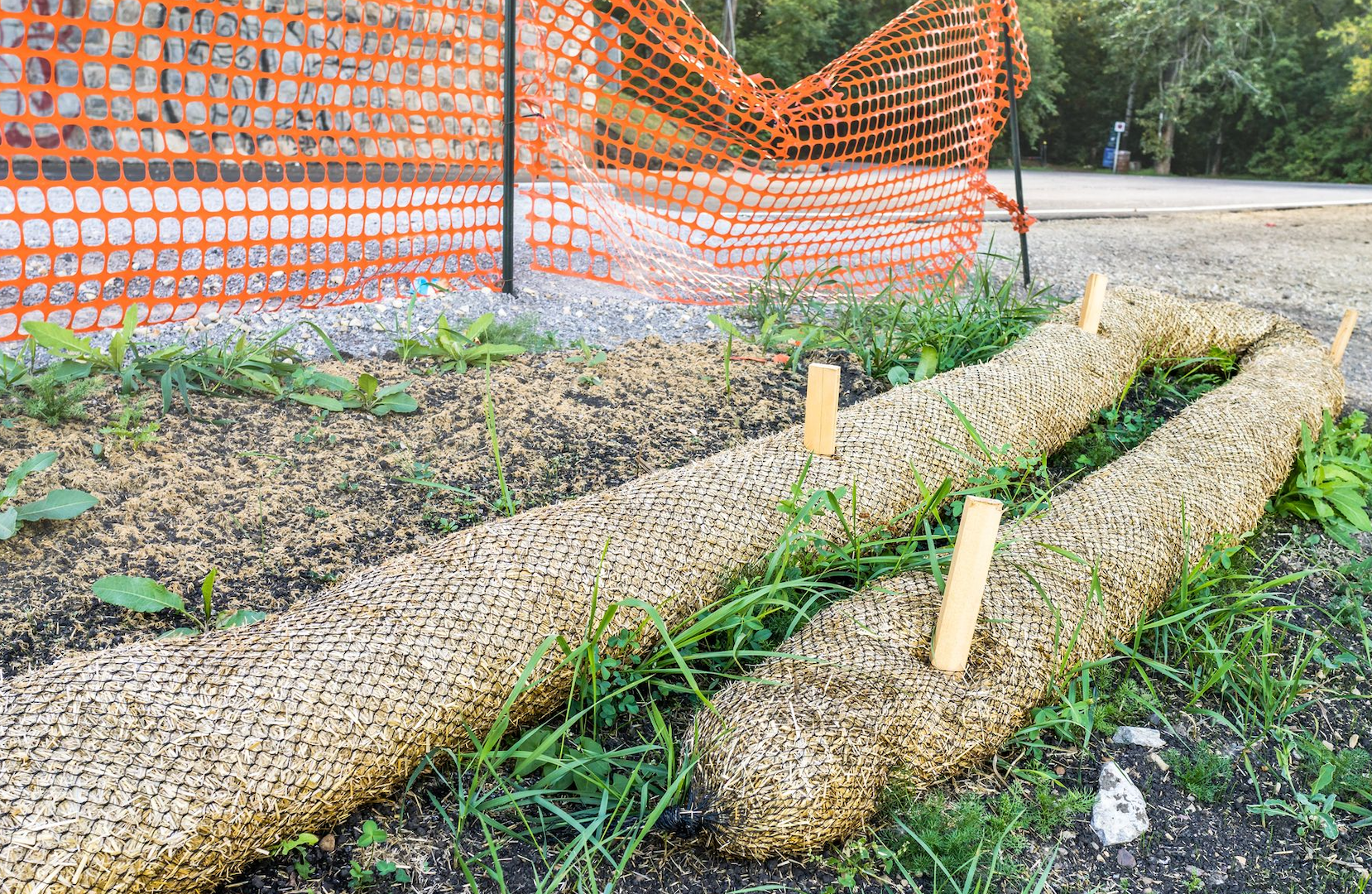
Storm prep and emergency overflow planning are core components of an SWPPP, enabling proper risk control, regulatory compliance, and jobsite safety.
When stormwater systems fail, the consequences extend beyond erosion. Discharges can migrate offsite, overwhelm controls, impact adjacent waterways, and trigger enforcement actions that delay schedules and increase costs.
According to CMiC, global insurance losses from extreme weather in the construction industry exceeded $105 billion in 2021.
This guide explains how storm prep and emergency overflow planning work together on active construction sites, why regulators focus on them, and how to build resilient systems that hold up during real storm conditions.
Why Storm Prep Matters Under a SWPPP
SWPPPs are designed to control pollutants in stormwater runoff. Emergency overflow planning addresses what happens when rainfall exceeds design capacity or when controls fail under pressure.
Proper storm prep ensures that erosion and sediment controls are installed correctly and capable of handling forecasted conditions.
In our experience, one of the most common citations found on construction sites is from poor storm preparation. Common findings include overtopped sediment basins, collapsed silt fence, clogged inlet protection, and unprotected discharge points.
These failures are rarely sudden. They result from insufficient inspection, poor sequencing, or missing contingency planning.
How to Plan for Effective Storm Preparation
Effective storm prep begins well before the weather hits the forecast. Construction sites should always operate under the assumption that every storm will test the weakest control on site.
Pre-storm preparation typically includes verifying that all erosion and sediment controls are installed per the SWPPP and match current site conditions. As grading progresses, flow paths change. Controls that worked last month may now be undersized or poorly located.
Inspectors and site supervisors should confirm that:
- Perimeter controls are continuous and keyed in properly
- Sediment basins and traps have adequate capacity and freeboard
- Diversions are directing clean water away from disturbed areas
- Inlet protection is secure and not already clogged
- Stabilized construction entrances are functioning as designed
Proper storm prep confirms that discharge points are armored, emergency spillways are unobstructed, and access routes remain passable for post-storm repairs.
Common Failure Points During Heavy Storms
Even well-managed sites experience stress during major rainfall. The table below illustrates common failure points where teams should focus the majority of their resources.
| Failure Area | Typical Cause | Preventive Action |
| Sediment basin overtopping | Undersized capacity | Increase storage or add secondary basin |
| Silt fence collapse | Poor installation or overtension | Reinforce posts and trenching |
| Inlet protection bypass | Clogging or displacement | Inspect before storms, upgrade materials |
| Channel erosion | Unstabilized flow paths | Armor channels and outlets |
| Offsite sediment tracking | Inadequate entrances | Extend or refresh stabilization |
Addressing these issues proactively reduces emergency response costs and compliance exposure.
How Emergency Overflow Planning Works on Job Sites
Emergency overflow planning acknowledges a critical reality: no system is infinite. Even properly designed controls can be overwhelmed by extreme rainfall or rapid snowmelt. The goal is not to prevent overflow at all costs, but to control where and how overflow occurs.
Overflow planning focuses on directing excess stormwater safely through stabilized pathways without causing erosion or off-site sediment discharge. This is especially important for sediment basins, traps, and temporary diversion channels.
Well-designed overflow systems typically include:
- Stabilized emergency spillways
- Armored outlet structures
- Energy dissipation at discharge points
- Redundant controls downstream of primary BMPs
These features prevent uncontrolled breaches, which are among the fastest ways to turn a compliant site into a reportable incident.
Aligning Storm Prep With Construction Sequencing
One of the most common SWPPP failures occurs when storm prep does not keep pace with construction sequencing. As new areas are disturbed, stormwater volume increases. If controls are not expanded or relocated accordingly, capacity mismatches develop.
Storm prep should be integrated into weekly planning meetings and tied directly to upcoming activities. When mass grading begins, sediment controls must scale with exposed soil. When utilities are installed, trench runoff must be managed. When paving starts, inlet protection becomes a priority.
This alignment ensures that stormwater controls evolve with the site rather than lag behind it.
Documenting Storm Prep As Part of Your SWPPP
From a compliance standpoint, what you document matters almost as much as what you install. Storm prep and emergency planning should be reflected clearly in inspection logs, corrective action reports, and SWPPP updates.
Inspectors should always document:
- Pre-storm inspections and findings
- Weather forecasts triggering additional prep
- Maintenance actions taken before rainfall
- Post-storm conditions and repairs
This documentation demonstrates due diligence and provides critical context if regulators review the site after a storm event.
By being proactive with stormwater management and emergency preparedness, you will maintain compliance, avoid unnecessary fines, and save time and money on cleanup.
Frequently Asked Questions
Is emergency overflow planning required under a SWPPP?
While not always explicitly named, overflow planning is an implied requirement. SWPPPs must prevent uncontrolled discharges, which requires planning for excess stormwater.
How often should storm prep inspections occur?
At a minimum, before forecasted rain events and after storms. Many sites perform weekly inspections plus additional pre-storm checks.
What rainfall amount should trigger emergency planning?
Any storm expected to exceed the design storm for installed controls should trigger enhanced prep and inspection.
Can sediment basins legally overflow?
Yes, if overflow occurs through a stabilized emergency spillway designed to prevent erosion and offsite impacts.
What is the most common SWPPP violation during storms?
Uncontrolled sediment discharge due to failed or undersized controls.
Do temporary controls need to be upgraded as construction progresses?
Yes. As disturbed areas and runoff increase, controls must be expanded or reinforced accordingly.
How soon must post-storm inspections be completed?
Typically, within 24 hours, though requirements vary by permit and jurisdiction.
Should emergency overflow features be documented in the SWPPP?
Absolutely. Documenting design intent and locations strengthens compliance and inspection defensibility.